
I am one of the equine vet team at South Moor Vets. As equine vets we often meet horses and ponies on some of their worst days.
Few conditions are quite as heart-breaking to witness as severe laminitis, a painful and potentially life-changing disease that affects the feet. Last December, I was asked to visit a pony who had been struggling with chronic laminitis.
When I first met him, he was extremely uncomfortable. He was reluctant to walk, stood leaning backwards to relieve weight from the front of his feet, and his hooves had become significantly distorted over time. His owner was understandably worried about his future. Laminitis occurs when the sensitive structures that suspend the pedal bone within the hoof become inflamed and damaged.
In many cases, particularly in native ponies, it is associated with Equine Metabolic Syndrome (EMS), a condition similar in some ways to type 2 diabetes in people. Unfortunately, many of our native ponies evolved to survive harsh winters and sparse grazing.
Lowland Devon pastures can therefore be rather like leaving a child unsupervised in a sweet shop. As with many cases, understanding the cause was just as important as treating the symptoms. We performed blood tests to assess his metabolic status and took x-rays of his feet to evaluate the position of the pedal bone within the hoof capsule.
These x-rays are invaluable, as they allow us to see changes that cannot be appreciated from the outside alone and help guide treatment decisions. Using this information, I was able to carry out a realignment trim designed to improve his comfort and support the structures within the foot.
Even small changes to hoof balance can make a significant difference. However, trimming was only one piece of the puzzle.
The real success of this pony’s rehabilitation has come from a combination of dedicated owners, careful management and ongoing veterinary support. We had detailed discussions about diet, weight management, grazing, exercise and long-term hoof care.
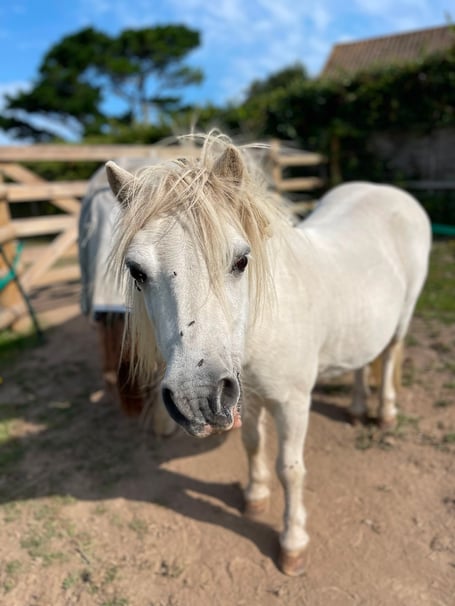
Every aspect of his daily routine was considered. Over the past six months the transformation has been remarkable. He has lost weight and his comfort levels have improved dramatically. The pony who once struggled to walk on the yard is now happily prancing around his paddock.
One of the most satisfying parts of this case has been watching an almost entirely new hoof capsule grow down. Hooves grow slowly, and rehabilitation takes time, but six months later he has almost completely grown out a healthy new foot.



Cases like this serve as a reminder that laminitis is not simply a foot problem, but a whole-horse disease that requires a team approach involving owners, vets and hoof professionals. There is rarely a quick fix and this pony’s recovery is a testament to the owners’
commitment. As we move through the summer months, when grass growth and sugar levels can increase, it is particularly important for owners to remain vigilant. Early signs such as foot soreness, reluctance to turn, increased digital pulses or changes in stance shouldn’t be ignored.
For this pony, the future now looks very bright indeed. Watching him trot happily around his field is such a rewarding experience, although he still firmly believes he deserves significantly more snacks than this vet allows!
Comments
We've recently changed our login process. If you have an account for commenting, you will need to re-register on the login window.
This article has no comments yet. Be the first to leave a comment.