
Barely had the dust settled on the government’s proposals to carve up Devon before efforts were underway to frustrate the process.
Devon’s prospective fate was confirmed in Parliament earlier this month (Thursday 16 July), with the county’s Labour-led cities Plymouth and Exeter being granted permission to expand into their affluent neighbours.
Alongside those new ‘Greater Plymouth’ and ‘Greater Exeter’ councils, an augmented Torbay was green-lighted, leaving the rest of Devon as a mega council covering a swathe of rural and coastal communities spanning around 110 miles from Salcombe in the south to Lynton in the north.
It was the latter part of the proposal that sparked fury across Devon, with some politicians calling it a “betrayal” of the county.
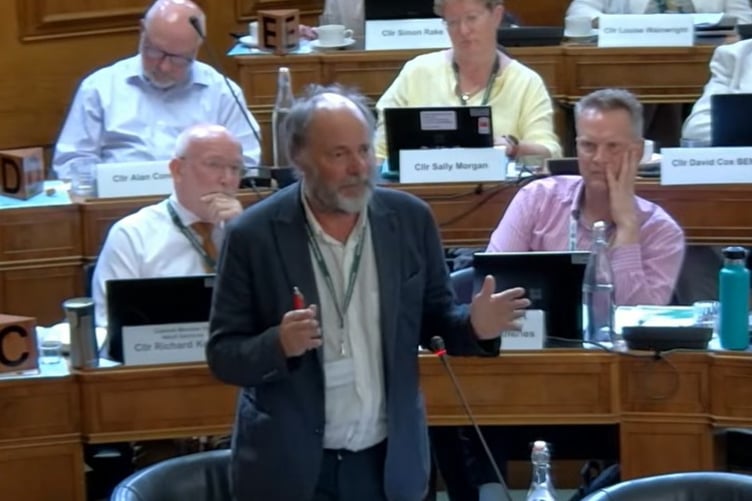
Within days, Devon County Council confirmed that it had begun information gathering with a view to submitting a Judicial Review. Such processes tend not to decide if a decision is right or wrong in principle, but seek to establish whether a decision was made correctly in line with relevant policies, procedures and regulations.
Here we consider possible arguments the county council may lean on or explore to make its case.
Sticking to the rules
A crucial argument will be for Devon to claim that the government did not follow its own advice on how to reorganise Devon.
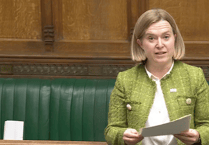
A claim of overlooking expert and high-ranking views was even made by the shadow secretary for housing, communities and local government, James Cleverly MP, when the announcement was made in the House of Commons.
However, the government would no doubt respond by echoing the words of Steve Reed MP, the secretary of state, that the choice was made because it “will enable a better outcome overall for the area”, and that it has been judged against the criteria set out in the consultation.

2) Actively opposed
Closely related to the first possible argument is the results of the government’s own consultation on the proposed council shake-up for Devon.
Just a fifth of respondents (20 per cent) were in favour of the government’s chosen option, with more than two-thirds (69 per cent) against it.
Indeed, the chosen option ranked fourth out of the five put forward by Devon’s councils.
While the government has always had the power to choose whichever option it wishes, and even to tweak proposals to make an amended option, the county council could claim that such negative responses in the consultation show a lack of support for the selected option.
3) Questionable boundaries
There may also be emphasis on some inconvenient boundaries that would emerge if the government’s option for local government reorganisation goes ahead.
One of those would be between Ottery St Mary and West Hill, which are two inextricably linked communities.
Under the government’s preferred option, the new expanded Exeter council would subsume West Hill, but Ottery St Mary would fall into the coast and country authority.
Interestingly, a proposal in 2022 to put each of the communities in different parliamentary constituencies ultimately failed, partly because of opposition from residents.
Other curious boundaries are also understood to transpire in Totnes, which would have part of Bridgetown in a different council, and in Dawlish and Teignmouth, which would be split between the new Exeter and Torbay councils, respectively.
4) Population predicament
The secretary of state’s letter to Devon cites part of the rationale for his decision being to allow “communities to be better represented through their councils with clear place-based public service priorities”.
However, opponents may argue that the vast footprint of the coast and country council has no obvious economic centre, and therefore providing services across that expanse could present the new council with a host of problems.
As Plymouth’s own submission stated, rural Devon has a population density of just 124 people per square kilometre compared to the city’s 3,311, which is something that could make it harder for services to reach the people that need them most.
While the coast and country council would still have the largest population – 460,000 – compared to the enlarged urban councils, the extra cost of delivering services across the council could present an issue.
Interestingly, the three urban councils will have populations below the 500,000 level that the government initially stated was an important factor.
5) Vulnerable children concern
Concerns around vulnerable children may also be used as an argument by the county council against the selected council overhaul, especially as fears on this topic have been aired by a government appointee.
The Children’s Services Commissioner for Devon County Council, Nigel Richardson CBE, warned in a report last year that one of his two major concerns for children’s services – which the county council oversees – was LGR. He stated that “anything that breaks” the positive improvement being seen in the county council’s children’s services department would “risk stopping the existing work in its tracks with an even bigger risk that things would quickly slip backwards”, he said.
While Devon’s children’s services effectively remains graded as ‘Inadequate’ by the education regulator, Ofsted, Mr Richardson’s report noted clear improvements.
The county council’s proposal for LGR would have maintained its existing footprint, but led to a new unitary council taking responsibility for all services within that boundary, instead of the split of services between county and district councils within that area now.
Ultimately, Devon will be hoping a Judicial Review isn’t necessary, having already made pleas to Andy Burnham to halt the process in the county.
But even if it does reach a court showdown, it’s likely to be a close fight.
Comments
We've recently changed our login process. If you have an account for commenting, you will need to re-register on the login window.
This article has no comments yet. Be the first to leave a comment.