
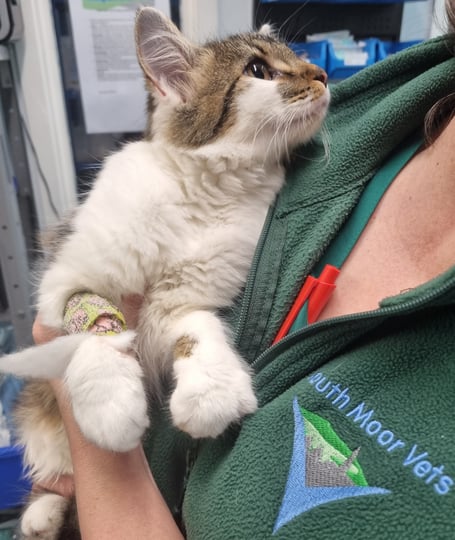
Muffin’s owner, Phoebe, placed her fabric carrier on my consulting table at South Moor Vets. Muffin, a gorgeous bundle of feline fluffiness rolled over on her back pawing the mesh carrier door. This cheered us all up and the smiles on our faces made up for the recent bad weather.
We checked Muffin over prior to admission for her operation (and made sure we had a female cat to spay!), then signed a consent form. We always check their microchip; often a neutering procedure is a good time to place a microchip if they don’t have one. Cats now legally need to be microchipped once over 20 weeks old: This came into force in June 2024. Muffin stole our hearts as she was so keen to be cuddled.
Once admitted and weighed our nursing team can make preparations for doses of anaesthetic drugs and pain relief to be calculated and drawn up. These doses are then checked by a second qualified nurse or a vet. We usually use a combination of three or four drugs administered by an intramuscular injection. Once the patient becomes drowsy, usually after 10-15 minutes, we can place an intravenous cannula, so we have access to the vein in case we need to give any emergency drugs, or top up the anaesthetic. Once fully asleep, we introduce a tube into the windpipe which attaches our patients to the anaesthetic machine for delivery of oxygen and anaesthetic gas if required. This gives us control of the depth of anaesthesia.
During the procedure, we are monitoring blood pressure, heart rate, temperature and breathing. We can use lots of observations to help us safely monitor anaesthetics, e.g. colour of mucous membranes, are they pink? Capillary refill - is the circulation good? Heart rate – is this as we would expect for this patient?


Cats are placed on their sides, clipped and then the site for surgery is prepared. The veterinary surgeon will scrub up and then don gown and gloves. Local anaesthetic can be used in the incision and sometimes in the abdomen as well. This decreases the requirement for anaesthetic gas. The actual procedure usually takes 15-20 minutes, unless it is difficult to find the reproductive tract, which can happen. Sometimes individuals have unexpected anatomical changes, e.g. a large ovarian cyst which may mean we need to make a bigger incision to allow the cyst to be exteriorized.
Muffins’ surgery was completed quickly and with no complications. We give a different drug to reverse part of the anaesthetic protocol and then make sure our patients are kept warm in recovery, as they are usually only a couple of kilos and lose heat easily.
Phoning their owners to tell them their pets are awake again and then seeing them reunited with their pets is always one of the best bits of the day. In Muffin’s case, I think the nurses could have cuddled her for much longer: they did not want to see her go!
Comments
This article has no comments yet. Be the first to leave a comment.