
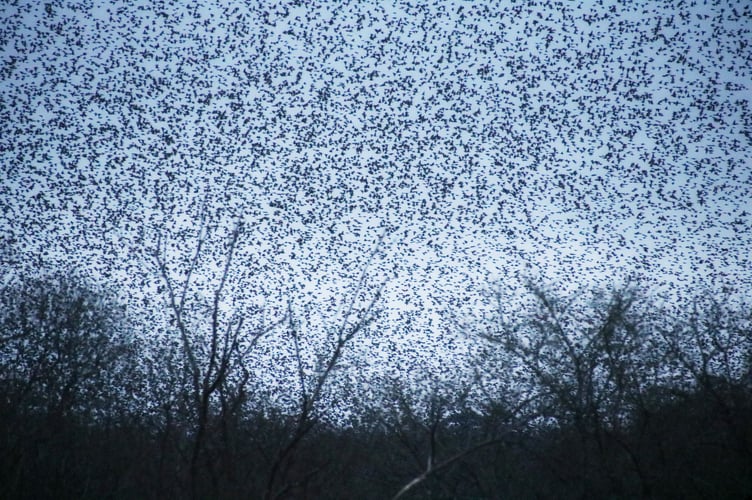
For many years I have been entertained by awe inspiring starling murmurations at Slapton Ley; I saw my first otters and have even made friends and recruited volunteers whilst gazing at these wonderful birds dancing in the sky.
I had heard of the spectacular starling murmurations in Somerset (A place where up to a million birds convene to spend the winter) but had never ventured to see them. At Slapton which hosts only a migratory pit stop on the starlings journey south, numbers are considerably smaller rarely exceeding 100,000.
So when some of my starling loving friends said they were planning to make their way to Somerset, I jumped at the opportunity to join them. We set off at the end of February on what turned out to be the only day of the week with a terrible weather forecast.
On arrival in Somerset we made a pit stop to see 300 cattle egret in a field, a breath taking sight when the most I had ever seen before was about 20. Then on to RSPB Ham Wall, where we proceeded along the old railway line which connects the two nature reserves of Ham Wall and Shapwick heath, safe in the knowledge that the starlings were currently gathering at the latter (or as safe as one can be when it comes to wildlife).



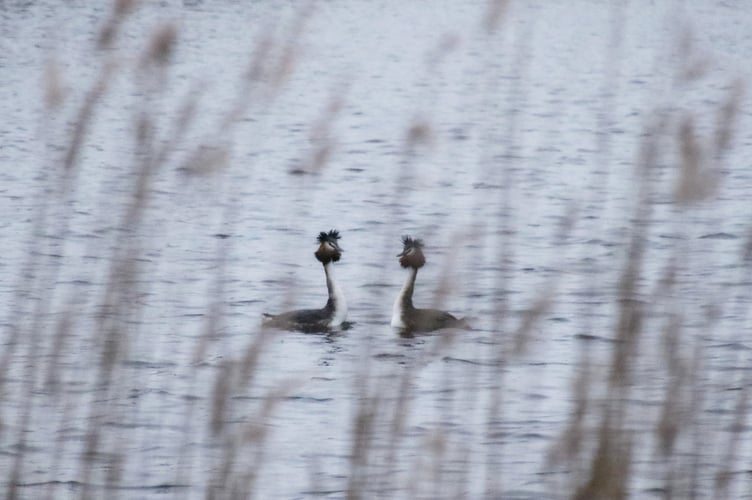
These former peat works, restored into wetlands make fantastic habitats for wildlife, particularly wetland birds. Along the way there were a number of view points and bird hides to explore and since we were super early we lingered as we went. We watched as Marsh Harriers glided overhead and peeping through the reeds afforded us glimpses of juvenile swans, tufted ducks and grebes.
There was mention of the possibility of hearing bitterns booming and my friend Angela promptly started doing her best impression, to which I excitedly joined in, much to everyone’s amusement.
The reserve was unusually quiet with not another soul to be seen. Of course this might have had something to do with the impending rain front that was bearing down on us, and maybe no one else is mad enough to set out to watch starlings with torrential rain forecast to hit at any moment.
The first hide was sat on stilts and we clambered up the stairs looking forward to see the elevated view. Once we had worked out how to open the windows (which required pulling on a chord which lifted the windows outwards) we gazed out over large lakes of water and watched as a pair of grebes started doing their courting dance. Coots chased each other across the surface of the water and one lonely pochard was spotted in amongst the tufted ducks.
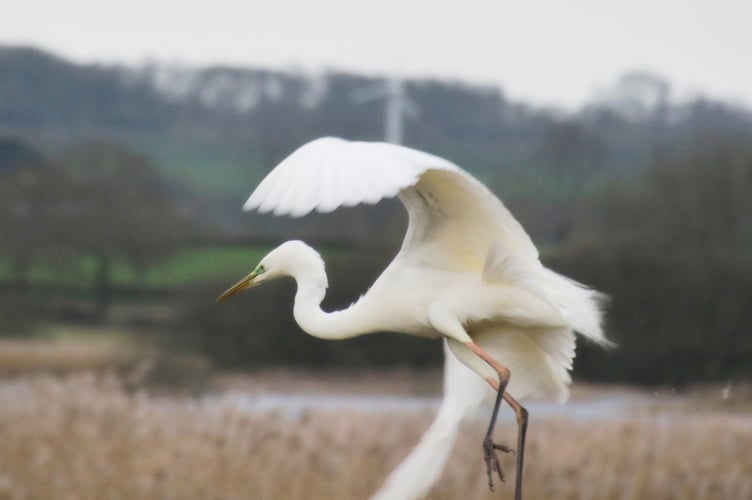
Soon enough the low drone of booming bitterns rattled through the reeds, and a great white pterodactyl like egret came in to land only a few metres from where we were.
I wandered off alone to another hide overlooking a vast lake where approximately 4000 ducks sat bobbing about in a huge raft. This group was mainly made up of wigeon, but I could spot some pintail amongst them.
Realising that I had not told the others exactly where I was going, I scuttled back to the main path and onwards towards the spot we were planning to watch the starlings. I found them amongst a few other brave souls who had started to gather, I was relieved that we weren’t the only mad ones about!
Starlings started to arrive in large groups, some of which were probably as large as the whole Slapton murmuration combined. Where they were gathering was unfortunately quite far off and behind some trees, so we concentrated on enjoying the antics of the incoming birds as they flew overhead.
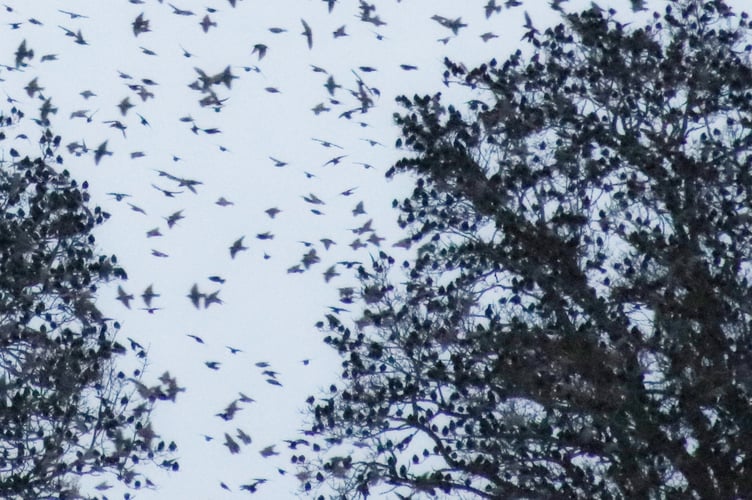
Suddenly there was the most tremendous sound of birds chattering and it wasn’t long before we found the source. Three trees nearby looked ever so much darker than their neighbours; it appeared that one of the incoming gangs of starlings had decided to take a break and perch amongst their branches. Just as we were marvelling at how many birds there were, another flock chose to join them, turning the tree tops completely black. Then in what my friend Graham described as an “Arboreal Monochrome Firework” they all took off at once exploding into the sky in a way that could not be captured in a photo. It was breathtaking.
We continued on along the path and as the main starling murmuration grew, they started to move a bit closer, flying one side of a patch of trees and then the other, which had us running back and forth along the path. The murmuration wafted briefly overhead before heading to an area further away to go to bed. As they started to settle down into the reeds, what was probably in the region of 500,000 birds turned the sky and backdrop into shades of liquid black, like a swirling blob of black treacle.
It was only when we started walking back, thrilled with our nature experience, that we realised that it had barely rained and it continued to stay dryish long enough for us to get back to our cars.
Comments
This article has no comments yet. Be the first to leave a comment.