

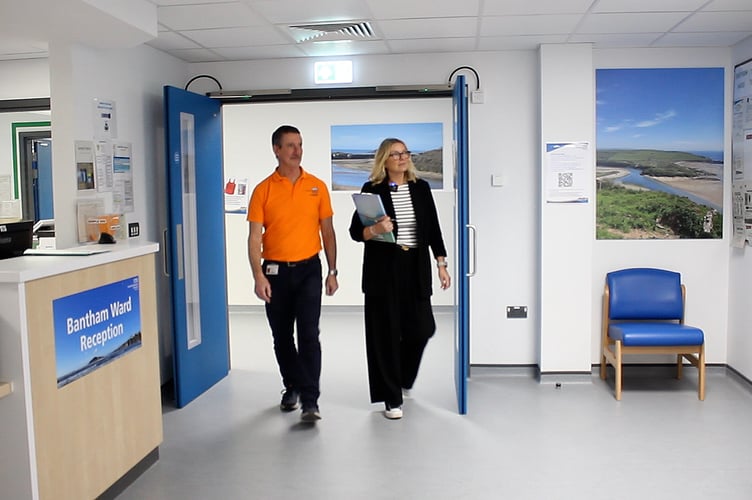
Standards of condition, appearance and maintenance at the University Hospitals Plymouth (UHP) Derriford Hospital site have been rated at 99 per cent in a recent PLACE assessment.
PLACE, which stands for Patient-Led Assessment of the Care Environment, forms part of a national system that helps NHS organisations understand how well they are meeting the needs of patients and where improvements can be made.
Inspection teams include at least 50 per cent patient assessors such as relatives, carers, friends, patient advocates or volunteers, offering a non-technical view of environmental and non-clinical aspects of hospital care.
Assessors rate standards across eight main areas: cleanliness, food, organisational food, ward food, privacy, dignity and wellbeing, condition, appearance and maintenance, dementia, and disability.



-receives-a-cheque-from-Dartmouth.jpeg?width=209&height=140&crop=209:145,smart&quality=75)
Dementia and disability environments scored particularly highly, with measurable improvements such as handrails and dementia-friendly signage rolled out across the hospital.
All UHP sites, including Tavistock and South Hams hospitals, scored above the national benchmark for patient privacy, dignity and wellbeing.
The trust also scored higher than the national average in five key areas: cleanliness (98.6 per cent), privacy, dignity and wellbeing (93.7 per cent), condition, appearance and maintenance (99 per cent), dementia (89.9 per cent) and disability (89.1 per cent).
John Stephens, Director of Estates and Facilities, said: “These results are a testament to the hard work and dedication of our Estates, Facilities and clinical teams who take great pride in providing a safe, clean and welcoming environment for patients, visitors and colleagues across our sites. Achieving such strong scores across multiple areas reflects the collective effort of many teams working together every day to maintain high standards.”
“I’d also like to extend my sincere thanks to our patient assessors who give their time and insight. Their perspective is invaluable in helping us see our hospitals through the eyes of patients and their families, and their feedback plays an important role in helping us continue to improve the environment in which care is delivered.”
Comments
We've recently changed our login process. If you have an account for commenting, you will need to re-register on the login window.
This article has no comments yet. Be the first to leave a comment.