
Relief has been expressed by locals in a South Devon village awaiting the delivery of vital rocks that will form part of beefed-up sea defences.
Onlookers gathered over the weekend as a barge full of huge boulders approached the shore, while a digger on the barge grasped them with a metal claw and placed them as close to the beach as possible.
Machinery based onshore will be able to move these rocks into position to build the new sea defences.
The rocks are among those coming from Scotland, Ireland and even Norway as part of a near-£20 million scheme commissioned by the Environment Agency to bolster the sea defences at Torcross.
Pete Moore, director at Forest & Beach based at nearby Beesands, took footage of the barge bringing rocks to shore this weekend.
“I lived on Torcross front when I was at school in the 1980s when the beach was very wide and the shingle loss has been dramatic over the past 15 years,” he said.
“Unfortunately, with this loss of shingle, the storms have meant Torcross front is at real risk so the rock armour will hopefully help protect the village as it has at neighbouring Beesands over many years.
“The sea defence policy for Torcross has always been ‘hold the line’ and this should go a long way to doing that.”
He added it was a “relief” to see the boulders arrive, a move many will hope provides robust protection from storms, including the likes of the one he recalled witnessing in January from the village’s Start Bay Inn.
He praised the area’s MP, Caroline Voaden (Liberal Democrat, South Devon), for “supporting the community very well and securing this funding”

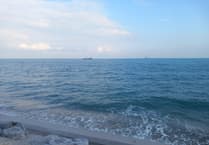


Properties along the promenade were damaged in brutal storms earlier this year, and the rocks will form part of additional sea defences aimed at protecting the homes.
The repairs are not, however, linked to a separate grant bid that has been submitted to the government to repair the A379 Slapton Line. The outcome of that bid remains unknown until the Department for Transport states whether it will be accepting the bid to its Structures Fund or not.
In terms of the rock armour, Mr Moore added its defensive qualities are likely to be called upon given the climate shifts.
“With the changing climate, a projected increase in the number of storms, and sea levels rising, we are all going to have to get used to changes along our coastline,” he added.
Comments
We've recently changed our login process. If you have an account for commenting, you will need to re-register on the login window.
This article has no comments yet. Be the first to leave a comment.