
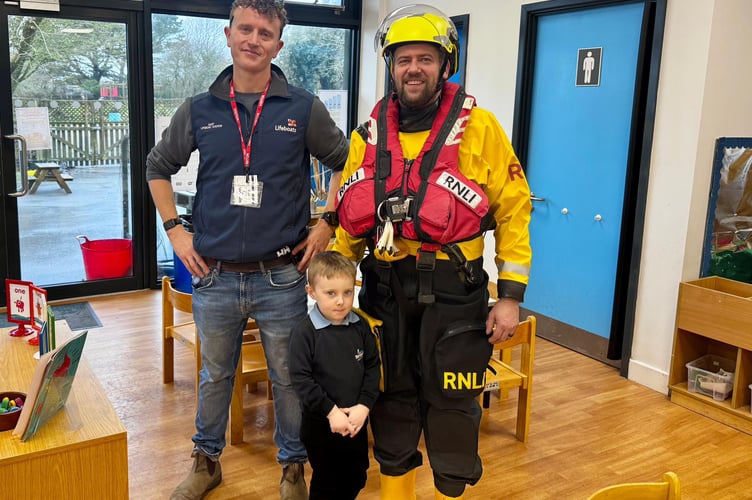
Dart RNLI volunteers Paul Mclellan and Robin Johnston visited Dartmouth Academy as part of the school’s Emergency Services Week.
It offered the nursery-age pupils a hands-on introduction to the work of the RNLI and the lifeboat crew.
While crew member Paul stayed hidden in the hallway preparing for a rescue simulation, the youngsters were shown photos of Dart’s new lifeboat station and the boats based there, including pictures of some of the casualties that the volunteers have helped.
Among them were Felicity and her three-year-old Cocker Spaniel, Lucca, who were taken to safety from the waterside in woods near Old Mill Creek.


The future RNLI recruits were told how the pager system works and what happens when an emergency call comes in.
To make the experience as realistic as possible, the children were then played the sound of a real pager going off before Paul arrived in the classroom to simulate responding to a shout, surprising no one more than his four-year-old son Henry.
As Paul put on each piece of kit, including his thermal base layer, dry suit, lifejacket and helmet, Robin explained the role of each item and how it helps keep lifeboat crew safe at sea.
RNLI volunteers are always happy to organise school and other visits and spread the message of saving lives at sea.
The following day Dart RNLI volunteers took part in a joint training exercise with flank station RNLI Torbay as the crews honed their skills for saving lives at sea.
Dart's two lifeboats were sent to a pair kayakers in distress.
The Torbay lifeboat was already on the scene when they arrived, and had located one of the casualties on Scabbacombe Sands, who needed medical assistance before being taken off on a stretcher.
The Torbay and Dart D Class lifeboat then carried out multi-vessel searching to locate the second casualty, who was located approximately two nautical miles from the original search position.
Comments
We've recently changed our login process. If you have an account for commenting, you will need to re-register on the login window.
This article has no comments yet. Be the first to leave a comment.