
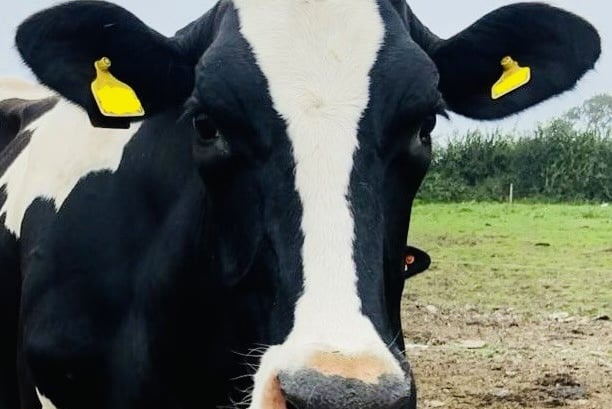
I was out TB-testing on Monday when the farmers and I started to spot that several of the cattle had weepy and sore-looking eyes. Checking in on all the cattle is one of the benefits of the TB (tuberculosis) test, and unfortunately, it’s one that keeps coming around; most herds in our area are legally obliged to TB-test all their cattle every 6 months now, and the fight to control TB is an important part of life for farmers and vets.
It’s not always the favourite part of the work for any of the team at South Moor Farm Vets though. The best-case scenario is that everybody spends a lot of time and effort completing the test, the herd passes, everybody’s done their bit to help control this nasty disease and life carries on exactly how it was before. But that’s heavily outweighed by the all-too-common worst-case scenario where the herd fails. Breaking that news is a horrible part of our job as TB-testers because we know just what a negative impact a TB “breakdown” has. It stops any cattle movement (which often freezes the farm’s only source of income) and triggers a compulsory cull of any TB reactor animals. This is always heartbreaking for farmers. Sometimes it involves large numbers of animals, and sometimes it happens again and again at consecutive tests. That stops the farm being able to plan for anything other than survival - and even that is not always a given.
No wonder the TB test can be a stressful time. It’s also a contentious topic; lots of people have passionate views on TB, because of the negative impacts of both the disease itself and control measures such as badger culling. Unfortunately, as with many emotive issues, the facts sometimes disappear in the debate.
Clarkson’s Farm did a good job recently of showing just how rough TB can be, but amongst the emotion, Jezza fell for one of the big myths of TB when he lamented that the abattoir inspection of his TB reactor cow had shown that “they never even had it”. In fact, although TB testing is certainly not a perfect test, it is a very “specific” one -meaning animals hardly ever test positive unless they do really have TB. So why the confusion? At the abattoir, they’re looking for large visible TB abscesses. But TB testing twice a year means cows only have a maximum of 6 months to contract TB before the next test. And if a cow had only had TB less than 6 months, it won’t necessarily have developed big abscesses yet - so we can end up with TB-positive animals that don’t have visible abscesses. If you’d like to know more, tbhub.co.uk is a great place to find clear, unbiased information about TB and its control.
Back to the eyes. I could see that the issue was an outbreak of a very infectious bacterial disease called New Forest Eye, so we treated each infected animal as it came through, and instigated a plan to protect the whole herd by vaccination. The farmers monitored them closely, and 72 hours later, I was able to check them all again as we got them all back through to read the TB test results.


Nearly all the eyes had healed up very nicely, and, I’m very glad to report, they all passed the TB test with flying colours!
Comments
We've recently changed our login process. If you have an account for commenting, you will need to re-register on the login window.
This article has no comments yet. Be the first to leave a comment.