
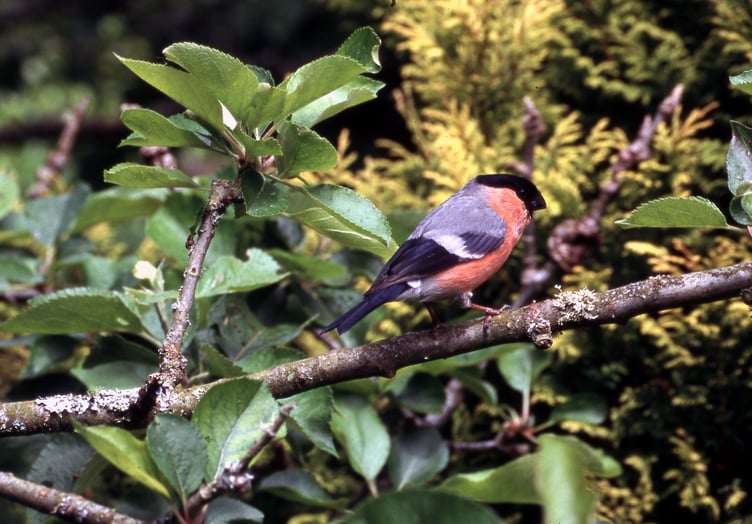
Bullfinches are shy birds that most of us do not see very often. Usually the only part of them we see is their white bottom as they fly away. Yet they are common right across Europe and Asia from the latitude of southern Spain to the latuitude of northern Norway eastwards to Japan and Vladivostock.
For most of the year they feed on a wide mixture of buds and seeds; docks, nettles, ash and brambles are some of the most recorded. When I was a boy growing up in Kent in the 1950s, the fruit growers regarded them as a pest. From January to April they were increasingly targeting the buds of apples, plums, and soft fruits. They would start at the end of a twig and work inwards. It was not a new problem. In the Devon parish of Branscombe, in the five years between 1793 and 1798, the churchwarden’s accounts record paying a penny for each of 171 Bullfinches killed, tuppence for each of 50 ‘Hawkes’ and fourpence for each of 37 Kites (240 pence made a pound). Thank goodness those days are past.
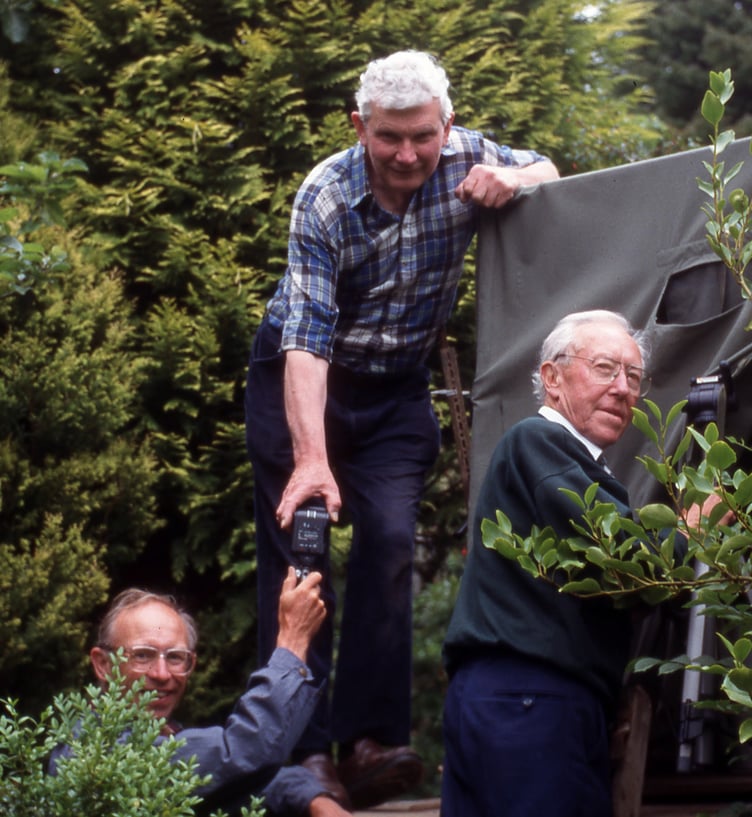
None of us who have had the privilege of watching a pair of devoted birds building their nests and bringing up their family could think of destroying their lives. Bryan Ashby, Chris Pierce and I never forgot that wonderful Spring among the birds in Frances and Wolfgang’s garden.
The last nest we found in the garden at Cotmore was a Bullfinch’s. It was in another cypress tree, tucked in where a branch emerged from the trunk; a similar position to that which the Mistle Thrushes had chosen but not near the garden shed. It was not far from where the Greenfinches had been. Nearby was a tall apple tree where the cock bird often chose to perch, surveying his territory. Chris and I took the hide on stilts that he had built for the Goldfinches along to its new position near the Bullfinches on 28th May.
Chris had worked out that the cock Bullfinch always perched on the same twig of the apple tree. Chris noticed the sun was shining on that twig for about ten minutes, just after 6a.m. Next morning he returned at 6 a.m. and took a perfect photo.
Unlike the Spotted Flycatcher and the Chiffchaff, the Bullfinch in Britain is a sedentary bird, seldom leaving the few square miles of its home territory. Unlike most small birds they usually pair for life and stay together throughout the year, not only for the nesting season. If you see one Bullfinch its mate will not be far away. Our pair often came together to feed their family. We followed the
incubation of the eggs and the progess of the young for nearly a month, until they fledged.
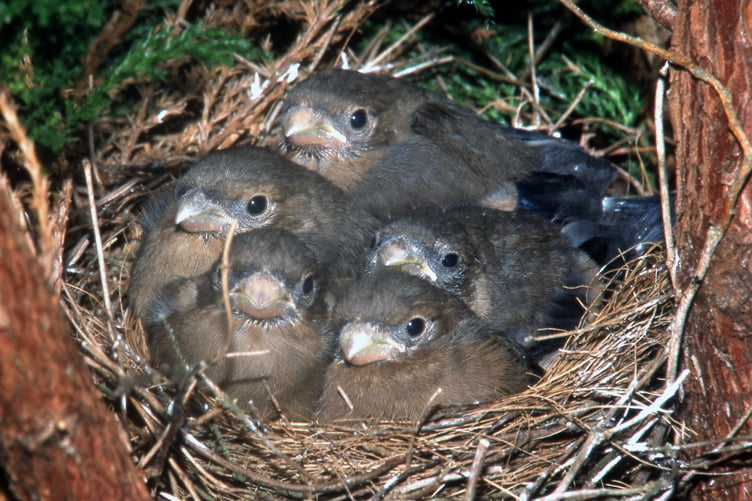
The nest was plain, mostly made from brown wiggly roots on a base of twigs. The five eggs hatched on 5th June. During one of his turns in the hide, Bryan saw a Wren arrive at the nest and inquisitively peer in to examine the very small chicks. On another occasion Chris was amused to see the young birds’ reactions to the arrival of a bumble bee, hovering above the nest. Some of the five opened their beaks as if begging it to come and feed them.
Both birds fed their offspring; often they appeared to be giving them small, green buds. The young were never aggressive to their parents. As with all the birds we saw, except the Goldfinches, they cleaned up after the young and kept an immaculately clean nest.

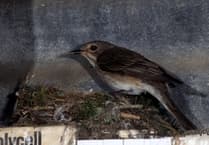


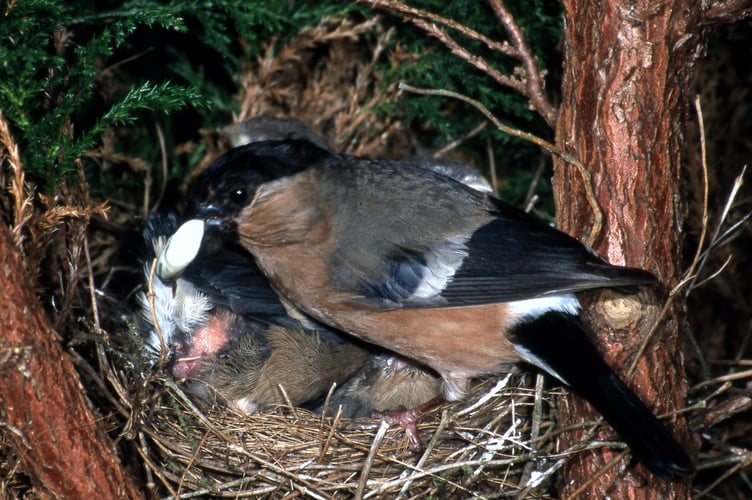
The sight of all five sitting in the nest contentedly together left us feeling very grateful to have been able to share a wonderful spring odyssey with them. We thought they were ready to fly by about 18th June but they didn’t finally leave the nest until 24th, by when they were nearly three weeks old.
Frances and Wolfgang called us ‘The Three Musketeers’. We certainly enjoyed our adventures. Bryan, Chris and I shared our story of the Garden Odyssey by giving talks about it to local clubs and communities at village halls and in schools. Twenty-five years have passed but it still seems as fresh as the Spring.
Comments
We've recently changed our login process. If you have an account for commenting, you will need to re-register on the login window.
This article has no comments yet. Be the first to leave a comment.