
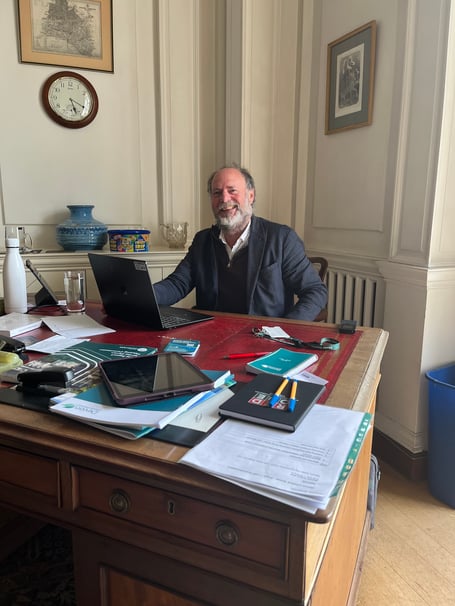
I’ve never been averse to reorganising local government, and I can see there are benefits. The problem is how it’s done. Proposals that will cost Devon’s council taxpayers around £100 million, with no guarantee of better services, aren't my idea of progress. Unfortunately, political dogma now seems to be running the show, and the original plans to develop better, more efficient ways of working have gone out the window. Over 95% of our expenditure is on protecting the most vulnerable, maintaining the road network and collecting rubbish. Maybe not the sexiest of topics, but absolutely crucial to the well-being of our communities.
If government wants economic growth, then it is these building blocks of healthy, well-educated and happy communities that will deliver it.
We are expecting the latest proposals in January. It is our intention to offer them a different solution, the Devon Way. One that will deliver their goals of simplification, removal of duplication, efficiency and more resilience. It will also reinforce the sense of community and local democratic accountability, with each council maintaining its own sovereignty. There will be just one number or email to contact local government, be it county, district, town or parish. All customer service centres across Devon will work as one.
We will build on the model of South Hams and West Devon councils where one senior officer leadership team works with the two councils.
Each council maintains its own independence, voting on its own budget and spending priorities, but sharing many of the back-office functions. This model can be expanded across Devon. Over time, as senior officers retire or move on, senior officers from other Devon councils will step up. I would envisage that within the next five years we would have half the number of senior officers than we have now. All achieved without expensive redundancy packages or the inevitable uncertainty and chaos that unrealistic timelines and structural changes will bring.
The whole LGR process had forced the county and districts to work closer together. We should have been doing it before, and it was something the district leaders had been working on since 2023. There is a much better understanding of issues between and within the councils. For example, services, particularly housing, need to be better aligned. Again, we had already started to develop multi-council meetings on specific policies. These included how districts can help pan-Devon homelessness issues and support our care leavers. The local knowledge in these areas is a vital part of finding the best solutions. Creating random unitary councils with officers and councillors displaced or discarded will not help.
Yes, we can work out new systems, but it will take years, and there’s no guarantee it will be any better, especially if our neighbouring unitary councils are anything to go by.



There are many issues and difficulties with local government, but the idea that structural reorganisation is the panacea is just wrong. Examples and experience around the country, especially rural areas, show us it doesn’t always work. Government is keen to give us mayors with more resources, powers and responsibility. Surely, it’s not too much to ask that we are allowed to develop our own solutions for our own local bespoke situations. If they really think Whitehall and Westminster know best, then I’m afraid we’re not going to see much change, just ever-increasing council tax and a deterioration in the services our local residents expect and deserve.
Comments
We've recently changed our login process. If you have an account for commenting, you will need to re-register on the login window.
This article has no comments yet. Be the first to leave a comment.