

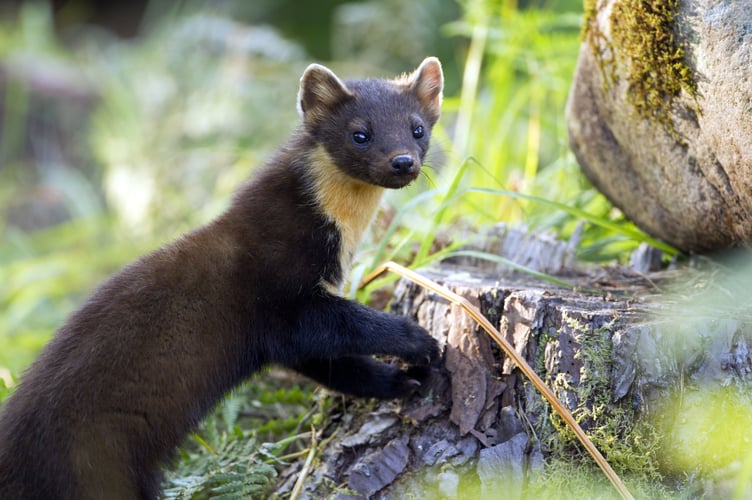
Avon Wood, near Kingsbridge, was the first wood to be protected by the Woodland Trust, when Ken Watkins and friends got together at his Devon home in 1972 to save the wood from felling and replanting with conifers, and the Woodland Trust was born. Fifty years later, this ancient woodland running along the banks of the River Avon, is home to otters and dormice and carpets of bluebells and snowdrops.
The beauty of our countryside, coasts and estuaries in the South Hams is built on the dedication and determination of local people, volunteers and wildlife groups, but also on the protection of our planning and environmental laws.
A new government bill, The Retained EU Law, is intended to sunset the majority of laws retained from the EU so that they expire on 31 December 2023. These laws include our most important environmental protections covering water quality, clean air, habitat protections and the use of pesticides. They include the Habitat Regulations that have been vital in protecting places for wildlife over the last 30 years.
The government has allocated only 15 months to December 2023 to review 570 environmental laws rolled over from EU law and either replace them or scrap them. Wildlife groups are concerned that there is not sufficient time to review all these laws and that they may be lost or replaced with weaker laws, and our wildlife and countryside will lose vital protection.

.jpg?width=209&height=140&crop=209:145,smart&quality=75)
Laws under review include The Water Framework Directive 2017 that sets standards for rivers and streams; The Air Quality Standards 2010 imposing limits on air pollution, such as particulate matter; The Marine Strategy Regulations 2010 protecting our coasts and seas. These laws are under review at the same time as the new Planning and Infrastructure Bill that will accelerate the granting of development consents, reduce the burden of environmental assessments and reform habitats and species regulation.
The removal of the Conservation of Habitats and Species Regulations 2017 is a particular concern. This law protects hundreds of wildlife sites and nature reserves from development and in Devon protects threatened species like dormice, harbour porpoise, otters, bats, curlews and seabirds and the places where they live. This protection extends beyond nature reserves across the landscape to protect vulnerable species as they do not stay within reserve boundaries. South Devon is a stronghold for the rare Greater horseshoe bat. The bats fly several miles every night from their roosting sites to feed, and need plentiful insects and joined up landscapes of hedges, scrub and trees and dark skies along their flight paths.
Under the Environment Act of last November, the Government committed to halt the decline of nature by 2030. It has only 8 years to meet this goal. The Conservative manifesto of 2019 promised “the most ambitious environmental programme of any country on Earth”. In response to the concerns of his constituents, Totnes MP, Mr Mangnall, has reiterated that, “This Government will never undermine its commitments to the environment in pursuit of growth. Any reforms will rightly contribute to growing our economy in equal step with successfully meeting our commitments in the 25 Year Environment Plan and the legally binding environmental targets through this [Environment] Act.”
But it is unclear how these targets will be met without strong regulation. According to the RSPB, “It’s the specific detail that really matters here. Having an Environment Act with strong targets is a great start, but if you axe the underlying mechanisms and protections by which you achieve these targets then they are essentially meaningless.”
The loss of so much biodiversity in recent decades has prompted South Hams Climate Action Network to call for much stronger legislation. While the existing Environment Act only offers to halt the decline of nature by 2030, the Climate and Ecology Bill (zerohour.uk) commits to reversing the destruction of nature by 2030. The Bill is already supported by Devon and South Hams Councils, but so far has not gained the support of MP Mr Mangnall.
In the South Hams, our local economy, food security and our own health and well-being are wholly reliant on a healthy natural environment. Environmental protections are not burdens on the growth of the economy but its foundation. Harry Barton, CEO of Devon Wildlife Trust, wrote this week, “Every change to our beautiful but crowded landscape, with the many competing demands on it, has to be thoughtful, considered and balanced.” He writes that economic growth should improve our quality of life and “must be planned carefully and with our natural environment at the centre”.
Local residents, both those who have lived here all their lives and those who have chosen the South Hams as their home, share an understanding of why this is such a special place to live. Inspired by the example of Ken Watkins and his friends fifty years ago, now is the moment to come together to protect what we love.
Comments
This article has no comments yet. Be the first to leave a comment.