
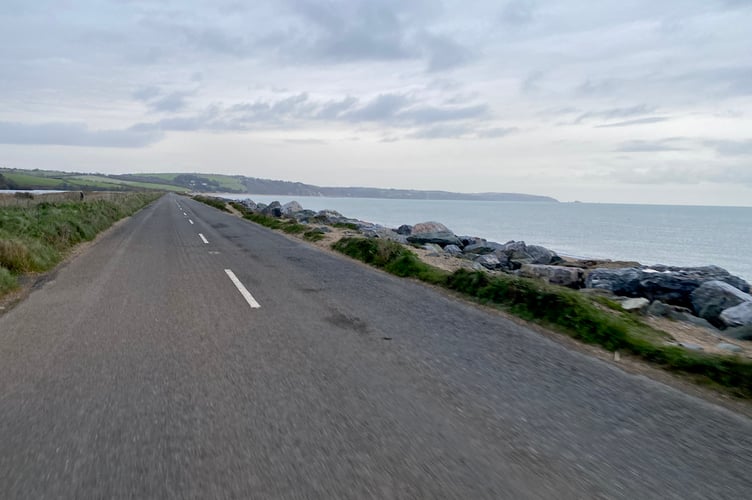
Questions have been raised about the long-term future of the Slapton Line road after it was severely damaged during Storm Chandra, cutting a vital coastal link between Torcross and Strete.
The road, which runs along Slapton Sands and separates the sea from Slapton Ley, is a key transport route for local residents and businesses. It also forms part of a Stagecoach bus route linking Kingsbridge and Dartmouth.
In recent weeks, sections of the road have been left unsafe after heavy seas and high winds breached the shingle barrier.
South Hams District Council is currently working alongside Devon County Council, Landmarc and central government to secure funding for repairs.

-Oscar-(special-mention)-Kingsbridge-Primary-School-28-11-25.jpg?width=209&height=140&crop=209:145,smart&quality=75)
-with-Rob-Sheridan-(left)-and-brother-Tony-Stevens-outside-the-High-Court-(Imag.jpeg?width=209&height=140&crop=209:145,smart&quality=75)

However, the latest damage has reignited debate over whether repairing the road again is the right long-term solution, given its repeated destruction during major storms.
It is widely acknowledged that the Slapton Line is vulnerable to coastal erosion and, eventually, will be lost to the sea.
Some residents have suggested that an alternative inland road should be built to replace it.
Cllr Julian Brazil, Leader of Devon County Council and ward councillor for Stokenham, said that option is not being considered.
“That is not happening, now or in the future,” he said.
Mr Brazil said the immediate focus is on repairing the road so it can continue to serve the community, while also being realistic about what lies ahead.
“The truth is terrible, but people have to be realistic,” he said. “We have seen the damage that can be caused by a single storm. No amount of money in the world will stop the sea eventually taking that road.”
The Slapton Line runs through an area of major ecological and historical importance.
Slapton Ley is the largest natural freshwater lake in south west England, and its protection is closely linked to the future of the road.
Slapton Sands also played a crucial role as a training ground for the D-Day landings during the Second World War, with a memorial on site that has previously been moved due to storm damage.
Mr Brazil said any future plans must balance community needs with environmental protection.
“There are two things that need to happen,” he said. “The first is to protect the line, and the nature reserve that is the Ley. The second is to work on a comprehensive adaptation plan.”
While the tarmac road will be repaired for now, Mr Brazil said communities need to prepare for inevitable change.
He described the Slapton Line as “one of the most beautiful roads in the country” and said that even when it is no longer passable to vehicles, it will remain accessible on foot and continue to be a destination.
He has long advocated for larger car parks in the area to help ensure local businesses remain viable and visitors can still access the coastline.
Residents who rely on the road daily, he said, will need to start considering alternatives.
“There is a misconception that when the road goes, so will the communities,” he said, “but things like school choices, work commitments and daily travel will have to adapt. The road cannot be saved forever, but this place will not be lost.”
Comments
This article has no comments yet. Be the first to leave a comment.