
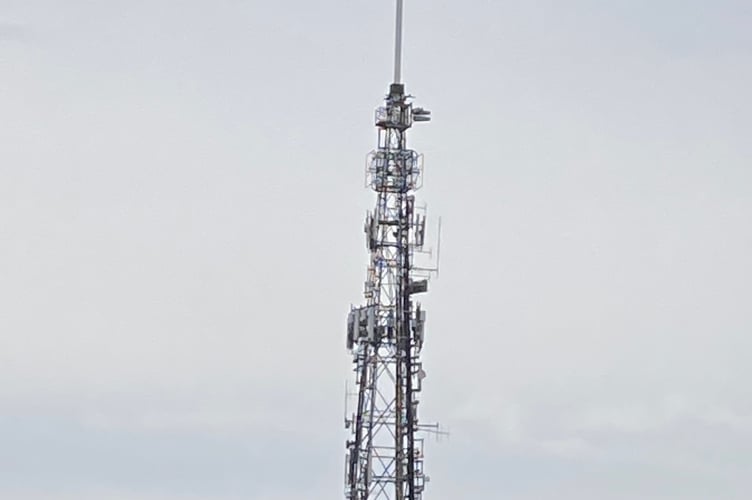
The government is considering switching off Freeview by 2034 which could leave parts of the South Hams without TV and viewers with substantial extra bills.
Freeview is the service that relies on a traditional TV aerial and it receives its signals either from main stations outside the district such as Beacon Hill and Caradon Hill or low-power relay stations at locations including Kingsbridge, Dartmouth and Ivybridge.
At the moment, once the equipment is bought it can be used by viewers at no additional cost other than the TV licence fee.
A move to internet-only services could impact rural areas, elderly, and low-income households that lack high-speed broadband or rely on traditional aerials.
-District-Governor-Elect-Phil-Bunt-presenting-the-Melvin-Jones-Award-to-Lion-Ian-Hill.jpeg?width=209&height=140&crop=209:145,smart&quality=75)

While Superfast and Gigabit broadband is available in most parts of the South Hams, there are a few ‘digital deserts’.
Currently Superfast which provides speeds of 5-10Mbps sufficient for HD streaming is available to 85 per cent to 94 per cent of homes while Gigabit providing 25Mbps or over is suitable for Ultra HD which is becoming increasingly common and is available in between 63.2 per cent and 64.2 per cent of the district.
The bigger issue is the cost with many elderly people not able to afford broadband or being forced to do so on pain of losing their TV channels.
Switching off Freeview (also known as Digital Terrestrial TV) would effectively mean having to pay for free-to-air TV.
Radio station operators would also suffer because many share masts with Freeview/DTT services and should those disappear it is likely that operators such as Arquiva would substantially increase their charges.
The Countryside Alliance is currently carrying out a survey of viewing habits in rural areas in the light of a possible switch off of Freeview/DTT and you can visit: https://www.research.net/r/BBCFreeview
Comments
This article has no comments yet. Be the first to leave a comment.