

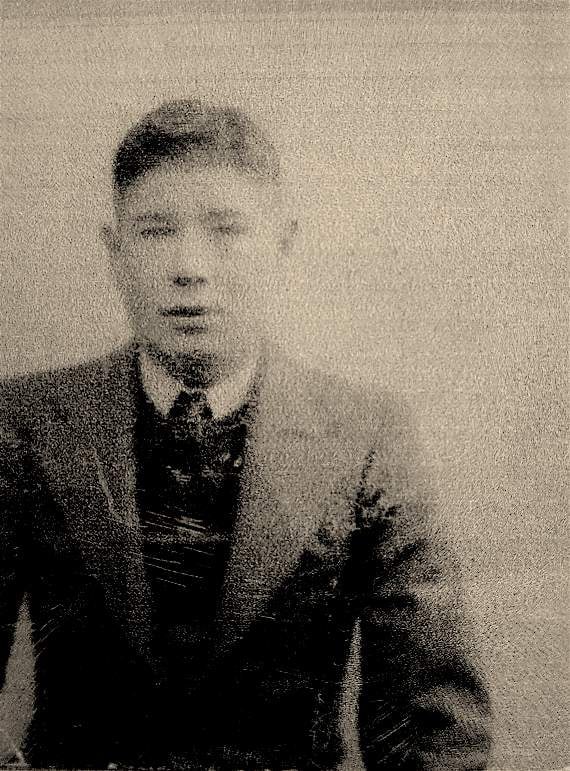
A Salcombe resident has helped track down the grave of a survivor of the Nazi’s horrific Bergen Belsen concentration camp.
Stan Keiller, who despite being named in the press recently as a ‘historian’ is actually a retired chiropodist who worked in Kingsbridge for many years, began his research when he was asked to give a talk about his childhood in Nazi-occupied Jersey during the Second World War.
His father The Reverend Francis William Killer - the family changed their name to Keiller later - moved with his family, Stan, his two brothers, sister and mother, to Jersey from Nottinghamshire in 1938. Eleven months later, war was declared.
When he came to do some research to check his memory for a talk in Salcombe last September, he discovered that the ‘only British survivor of Bergen Belsen’, a man called Harold Osmond Le Druillenec, was not the only one, and another Jerseyman, Frank Le Villio, had also survived the camp that Harold had called “That hell on earth”.



Frank, a teenager, had been arrested after ‘liberating’ a German motorbike and taking it for a joyride. He was found guilty of military larceny and sentenced to three months imprisonment. For sentences of three months and over, prisoners were deported to France.
After D-Day, the American were quickly advancing up the French coast, opposite the islands, and this prevented Frank’s return on completion of his sentence. Instead, Frank, Harold and his sister and Channel Islands resistance movement member Louisa Gould, the subject of the recent film ‘Another Mother’s Son’, were moved to concentration camps in Germany.
Louisa eventually perished in the gas chambers in the Ravensbrück concentration camp in February 1945.
Earlier this year, Stan offered to give a talk about his time in occupied Jersey as a thank you to the priest in charge of his father’s former parish, St Cyprian’s in Nottingham. Having learnt that Frank has been repatriated to live with an aunt in Nottingham, he thought the inclusion of his story would give an interesting dimension to the talk.
After learning that Frank had died of tuberculosis, which he had contracted in Bergen Belsen, in Nottingham’s City Hospital on September 26, 1946, Stan wanted to find out more about him and where he was buried.
He contacted the Nottingham Post, the local newspaper, to find out if they had records of his death, or any articles about him surviving the camp, but they could find nothing. He also contacted The Societe Jersaise in St Helier, asking to check for any record of his burial. “It was like he didn’t exist” said Stan.
“The parish where Frank’s aunt lived had been a deprived area before the war”, explained Stan, “and as his mother had died when he was aged just two and he was sent to an orphanage on Jersey, I suspected, after there were no records of his burial, he may have been buried in a pauper’s grave.”
He contacted Father Derek Hailes, of St Cyprian’s Church in Nottinghamshire, who “took it upon himself” to track down Frank’s whereabouts”. Father Hailes emailed him to say that they had found the cemetery, the undertakers, and the address of Frank’s aunt, but not the grave.
A few days later, Father Hailes had tracked down a record in a ledger that confirmed that Frank had been buried in a pauper’s grave along with seven others.
“It was unmarked”, Stan continued, “there was no headstone, no legend or marker.”
After finding out that Frank’s body, along with the others, was buried in the plot, Father Derek and a parishioner cut the grass and tidied up the gravesite before placing a small wooden cross to mark the grave.
Following several appeals for relatives in the local press in Nottinghamshire, Stan finally appeared on BBC Radio Jersey, and as a result, Frank’s cousin made contact, enabling him to complete some of the jigsaw puzzle of Frank’s life.
Stan said he is “so delighted I have been able to bring closure to a sad little story, we know where Frank rests.”
Stan, his brothers and their friends could have been one of the unlucky ones. His time under occupation saw his family go through interrogations, house searches, arrests and imprisonment.
Jersey was finally liberated on May 9, 1945. Stan said: “We were imprisoned on our own island, but we didn’t suffer anywhere near how others did under Nazi rule.”
Bergen Belsen concentration camp was the first camp liberated by allied soldiers on April 15, 1945. It is thought that at least 50,000 people were killed there between 1940-1945, with many more succumbing to disease and starvation after the camp was liberated.
Comments
This article has no comments yet. Be the first to leave a comment.