

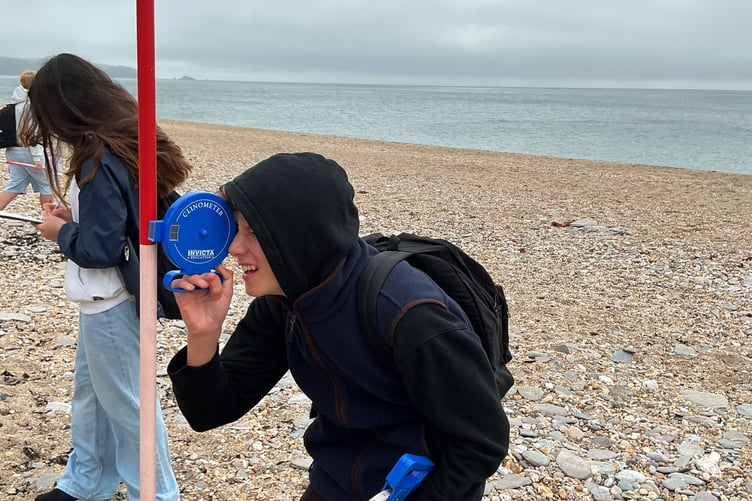
Geography students at Kingsbridge Community College, have been exploring some of the South West's most iconic landscapes as part of their GCSE and A Level studies, developing practical fieldwork skills while investigating real-world environmental and human geography.
Year 10 students recently visited Slapton Sands to complete their GCSE fieldwork and took some time exploring the unique coastline. Using clinometers, tape measures and ranging poles, students compared beach morphology at different points across the bay, beginning at Strete Gate before moving to the middle car park and finishing at Torcross. Along the way, they investigated coastal defences and examined the impact of erosion and storm damage.
Meanwhile, year 12 geographers travelled to Lyme Regis and Exeter as part of the preparation for their A Level independent investigation, where students design and carry out their own geographical research projects.
The independent investigation allows students to explore topics that interest them most, with this year's projects focusing on a wide range of local issues, including whether Bantham's sediment cell is functioning effectively and the arguments around reinstating the road at Torcross.
The visits gave students the opportunity to investigate potential study sites, develop research questions and begin planning their own data collection, helping them build both analytical and investigative skills.
Tina Graham, Principal at Kingsbridge Community College, said: "Fieldwork is one of the most exciting aspects of studying geography because it brings learning to life. We are incredibly fortunate to have such an outstanding natural environment on our doorstep, allowing our students to investigate real geographical processes and issues first hand. These experiences help students think critically and apply their classroom learning to the world around them."
Matthew Shanks, CEO of Education South West, said: "Fieldwork like this encourages students to become independent learners while helping them understand the environmental and social challenges facing their local area. It is these real-world experiences that help prepare them for the next stage of their education and future careers."
Comments
We've recently changed our login process. If you have an account for commenting, you will need to re-register on the login window.
This article has no comments yet. Be the first to leave a comment.