
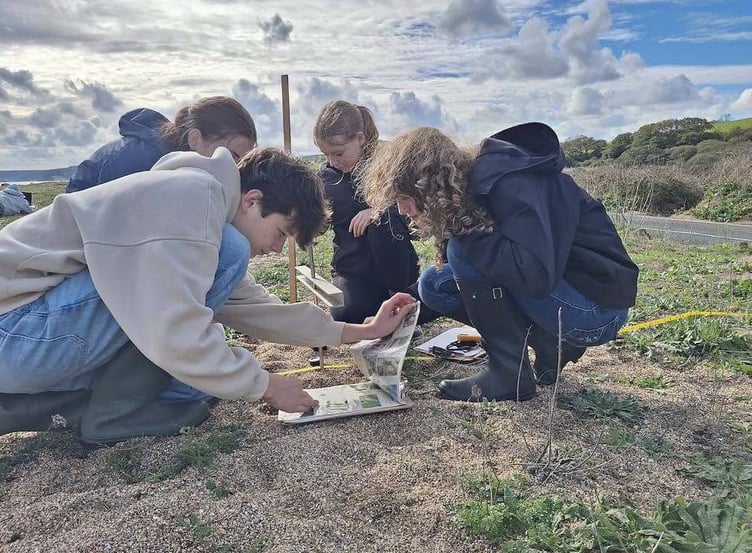
A group of 21 A Level Biology students from Ivybridge Community College swapped the classroom for the great outdoors during a three-day ecology field trip to Slapton Ley.
The Year 12 and 13 students visited the Slapton Ley Field Studies Centre, where they carried out practical investigations across coastal, freshwater and woodland habitats.
Under the guidance of the centre’s specialist tutors, students collected and analysed ecological data, developed their skills in identifying plant and invertebrate species and applied statistical techniques to investigate real-world environmental questions.
The intensive programme involved long walks and a packed schedule of fieldwork, allowing students to put their classroom learning into practice.
The college praised the group for their enthusiasm, hard work, humour and excellent conduct throughout the visit.
The field studies centre is operated by the Field Studies Council, an environmental education charity founded in 1943 which provides residential and day trips for students studying subjects including biology and geography.
Located on the Start Bay coast, the centre is surrounded by the 210-hectare Slapton Ley National Nature Reserve, which includes the four-kilometre Slapton Sands beach and the largest natural freshwater lake in the South West.
Despite being separated from the sea by only a narrow shingle barrier, the lake remains entirely freshwater and is surrounded by reedbeds, marshes and woodland, providing habitats for a wide variety of wildlife.
The area is designated a Site of Special Scientific Interest and was declared a National Nature Reserve in 1993.
The reserve is managed by the Field Studies Council in partnership with landowners Wild Planet Trust, Natural England and South Hams District Council.



It is open to the public daily, with free admission.
For more information about the centre and its educational programmes, visit tinyurl.com/5ba2dy75.
Comments
We've recently changed our login process. If you have an account for commenting, you will need to re-register on the login window.
This article has no comments yet. Be the first to leave a comment.