
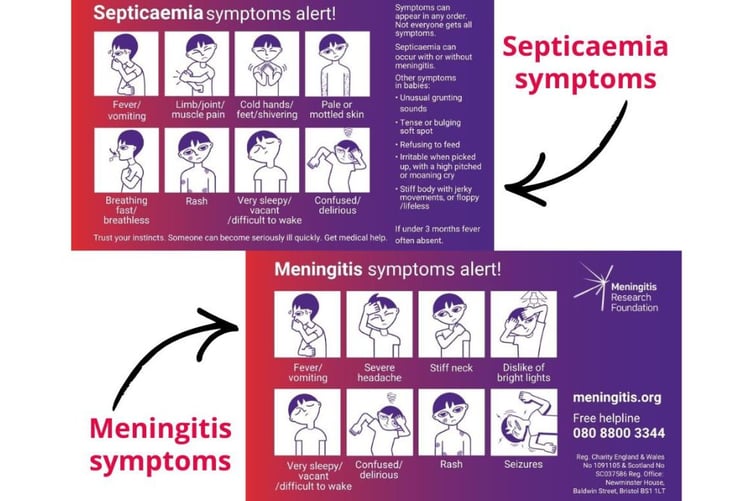
In the wake of a spate of meningitis cases in Kent, Devon County Council is keen to ensure residents know which symptoms to look out for.
The council also wants to reassure residents the local risk in Devon has not changed, and there is currently no evidence of wider spread.
However, it’s always important for people to be aware of the signs and symptoms of meningitis and septicaemia, and for people to stay vigilant as these illnesses can develop very quickly.
Although vaccinations against meningitis can offer some protection against getting the infection, not all causes of meningitis are preventable by having vaccinations. Therefore, it’s still really important to recognise the symptoms, even if you have already been vaccinated.

.jpeg?width=209&height=140&crop=209:145,smart&quality=75)


Meningococcal disease is an uncommon but serious disease caused by meningococcal bacteria.
Meningitis is the inflammation of the protective membranes around the brain and spinal cord. Septicaemia is a serious infection of the bloodstream.
The onset of illness is often sudden and early diagnosis and treatment with antibiotics are vital.
The symptoms below can present in any order and may not always be present. Although the rash is often the most known symptom, this does not always occur and can develop after other earlier symptoms so it is important not to wait for a rash.
The symptoms include:
- a rash that doesn’t fade when pressed with a glass
- sudden onset of high fever
- severe and worsening headache
- stiff neck
- vomiting and diarrhoea
- joint and muscle pain
- dislike of bright lights
- very cold hands and feet
- seizures
- confusion/delirium
- extreme sleepiness/difficulty waking
People with meningitis, septicaemia or sepsis can become seriously unwell very quickly. This means checking on people (and encouraging young people living away to check on friends) as rapid treatment is critical.
Call 999 immediately or go to your nearest A&E if you think you or someone in your care could have meningitis, septicaemia or sepsis.
Trust your instincts and do not wait for all symptoms or for a rash to develop.
Call NHS 111 for advice if you’re unsure whether it’s serious.
There are numerous strains of the meningococcal infection, and some, but not all are covered by vaccinations.
The MenACWY vaccination gives good protection against MenA, MenC, MenW, and MenY and is routinely offered to teenagers in school Years 9 with catch up available in school Years 10 and 11.
For those who have left school, they are able to access this vaccination via their registered GP up to age 25.
Since May 2015, babies are offered vaccination for Men B as part of the routine programme at 8 weeks, 12 weeks and 1 year by their registered GP. These vaccinations can be caught up, up to the age of 2.
The Men B vaccine does not protect against all MenB bacterium types. This is why it is so important to raise awareness of signs and symptoms alongside the available vaccines.
To remind yourself of whether your children have had all the routine vaccinations you can check your child’s Red Book. Alternatively, the NHS app can also provide a vaccination history, or ask your registered GP practice.
Comments
We've recently changed our login process. If you have an account for commenting, you will need to re-register on the login window.
This article has no comments yet. Be the first to leave a comment.