

COUNCIL taxpayers will be paying an average of £15 a year extra for police services from April to keep officers in post and police enquiry desks open.
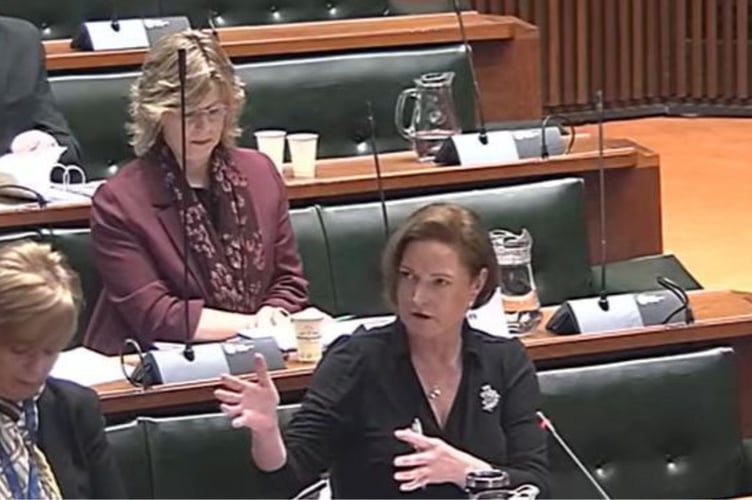
The Devon and Cornwall Police and Crime Panel agreed the 5.2 per cent rise proposed by Police and Crime Commissioner Alison Hernandez, which equates to £1.50 a month on a Band D property over 10 months.
Panel members heard that a government grant settlement had left the force with a budget shortfall or around £3 million for 2026-7.
Ms Hernandez said plans for a new enquiry desk at Launceston had been shelved but the money would secure the 17 that had reopened.
-Oscar-(special-mention)-Kingsbridge-Primary-School-28-11-25.jpg?width=209&height=140&crop=209:145,smart&quality=75)
-with-Rob-Sheridan-(left)-and-brother-Tony-Stevens-outside-the-High-Court-(Imag.jpeg?width=209&height=140&crop=209:145,smart&quality=75)

Asked if there were any benefits the public would see from the increase the commissioner said the 3,610 “record” number of officers would be retained, there would be more PCSOs recruited, people could get hold of the police easier than ever before, a new crime reporting system for businesses had been set up and services for victims of sexual violence were improving.
There will be no funding for hotspot police to target areas of with persistently high levels of crime and disorder but there was still cash to provide street marshals, said the commissioner.
She called the funding settlement from the government which makes up 58 per cent of the budget “structurally flawed”.
By 2029 the force has to make £17.2 million of savings with £9.9 million included in this year’s total budget of £461.5 million.
The government caps the amount that police commissioners are allowed to increase council tax at £15 for a Band D property, but even with the maximum increase allowed, the budget for Devon and Cornwall Police will only increase by 4.2 per cent in 2026-7 compared to the national average of 4.5 per cent, she said.
One of the reasons for the shortfall was that money which was previously linked to the recruitment of extra officers has been reduced by half. A figure of £5 million which had previously been allocated to cover the cost of recruiting 95 officers has been reduced in this funding settlement to £2.5 million.
This meant the Devon and Cornwall force had been left with a funding gap equivalent to the loss of 47 officers (half of 95).
Taxpayers can expect to see the maximum rise of £15 each year for the next three years.
The commissioner has highlighted long-standing issues with the police funding formula, which she says continues to fail rural and coastal areas.
“Many families are already under immense financial pressure, and I do not believe it is fair for the only option to be to ask people to pay even more,” she said.
Ms Hernandez said Devon and Cornwall had been helped by the portion of money it received from the second homes tax. Last year it received £6 million with a similar amount expected in 2026/27.
In addition it was getting £1.2 million of the money seized from controversial influencer Andrew Tate from bank accounts in Devon to spend on violence against women and girls.
Staffing makes up 87 per cent of the budget and includes the police and crime commissioner, whose job it is to set budgets, appoint a chief constable and hold the police to account, and her office of 30 staff, 199 PCSOs, 3,610 officers, 2,250 police staff, 17 tri-service officers, nine collaborative post (eg community responders) and 58 police dogs.
The force manages, maintains and replaces 1,186 vehicles, 129 buildings, six custody centres, one firing range, four boats, 1,053 guns, 7,902 laptops, 4,862 mobiles, 3,483 body worn videos and 5,516 police radios.
The PCC role is set to be abolished in 2028 and transferred to elected mayors or new police and crime boards.
Police reforms are also on their way which could see the country’s 43 forces merged into fewer, larger police forces.
It follows a similar line to local government reorganisation which will see Devon’s 11 councils and two tier structure replaced with larger unitary authorities responsible for all services.
Chief constable of the Devon and Cornwall Constabulary James Vaughan said he was in favour of larger forces but was determined to get the best deal for Devon, Cornwall and the Isles of Scilly.
The officer, who was brought in to lead the constabulary at a time when the former chief constable and acting constable were suspended, has agreed to stay on as interim for another year and oversee more improvements in the force which came out of special measures last year.
Ms Hernandez called the chief “excellent”.
CC Vaughan’s Operation Resolve launched last autumn is aimed at restoring frontline patrol and neighbourhood policing.
He told the panel he had returned 90 officers to frontline policing roles from other jobs since that time with another 50 planned this year.
A rank review was also conducted on 60 officers whose roles have changed after Mr Vaughan said the force was “top heavy”.
Police and crime panel member Cllr Mandy Ewings (Ind, West Devon Borough Council) said she was happy to support the increase to pay for police services as all local authorities were also having to put their part of the council tax up to the maximum too.
“The government expects all of us to do that because that is what the funding settlement relies on. It is forcing us to do something just so we can maintain basic services and it is morally wrong. We had a choice before but now we don’t.”
Comments
This article has no comments yet. Be the first to leave a comment.