

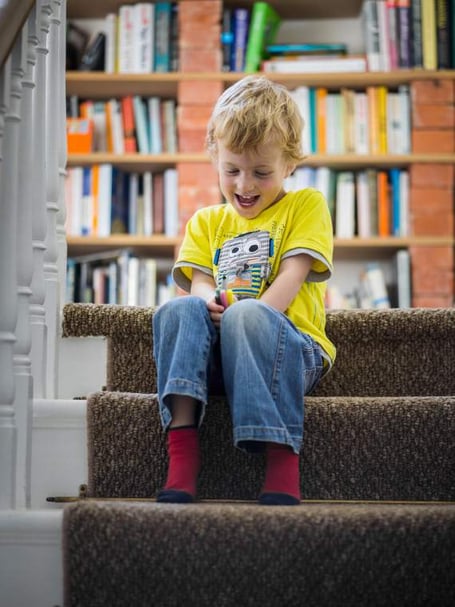
Parents in the South Hams are being urged to get their children the flu vaccine after a three-year-old dies of severe sepsis.
Sam Morrish, from Devon, died from severe sepsis, which involves a dramatic reaction by the body’s immune system to an infection. It can develop quickly, damaging vital organs.
His sepsis was the result of him getting common flu, and his parents Scott and Sue are keen that other children don’t suffer the same fate.
To help publicise the importance of the flu vaccination for children, the Morrishes have worked with the local NHS to create an unforgettable advert for social media than will be seen across Devon.


The advert focuses on Monkey, Sam’s favourite cuddly toy, who calls on parents to heed the warnings about flu. You can watch it below.
Sue, from Newton Abbot, said: “When Sam was first poorly he just had flu, but he was still within the ‘normal’ range of how he would be when he was poorly. But the morning before he died was different.
“I had never seen Sam that sick before. His temperature had gone down to normal but he appeared more ill and very pale. It seemed odd and wrong. We’ve learned since that this is often a sign of bacterial infection.
“We really don’t want other children and parents to experience what we have, so we hope the video will spread the message far and wide.”
Flu can be a very unpleasant illness for children, with potentially serious complications, including bronchitis and pneumonia.
For children with long-term health conditions such as asthma and diabetes, it is especially important that they are vaccinated because they are more likely to get complications from flu.
Vaccinating children also helps to protect other members of the community who are vulnerable to flu – for example, older people, babies, and pregnant women.
The children’s flu vaccine is offered as a yearly nasal spray squirted up each nostril of young children. It is quick, painless, and works even better in children than the injected flu vaccine.
The vaccine is absorbed very quickly. It will still work even if, after the vaccination, the child develops a runny nose, sneezes or blows their nose.
The vaccine is available free on the NHS for eligible children, including: children aged two and three on 31 August 2017 – ie children born between September 1, 2013 and August 31, 2015, children in reception class and school years one, two, three and four, children aged 2 to 17 with long-term health conditions.
Children aged 2 to 3 have to go to their GP to get it, and the other child ages groups are offered it in school.
Further information is available on NHS Choices: http://www.nhs.uk/Conditions/vaccinations/Pages/child-flu-vaccine.aspxPeople in South West who are the most vulnerable to flu are being urged to get their free flu vaccination, ahead of the winter period when the virus is most common.The programme launches as the Chief Medical Officer has warned that flu, and complications associated with it, cause 8,000 deaths on average a year in England.This year’s campaign aims to continue to increase uptake of the flu vaccination.Jenny Harries, Deputy Director, Public Health England said: “We know that flu can be very serious espescially for the most vulnerable people in the community.“I would urge eligible people in the South West to help keep the most vulnerable in the region well and to avoid unnecessary hospital visits by making sure they are vaccinated.“Last years flu vaccination uptake figures indicate that children aged 2-4 years could be better protected. It is particularly important for children to get vaccinated to keep them well and to minimise the chance of spread wider in the community, children can easily get the vaccine through a nasal spray.”People with respiratory diseases like COPD, emphysema or asthma are seven times more likely to die if they catch flu, and people with cardiovascular problems like chronic heart disease or angina, or have had a stroke, are 11 times more likely compared to those who don’t. The risk is far worse for those with chronic liver disease, who are 48 times more likely to die if they get flu.Another way of protecting vulnerable adults is to vaccinate children, who are ‘super-spreaders’ of the virus. Last year’s flu vaccination programme reduced the risk of flu in children who received the vaccine by 65 per cent.For healthy children aged 2-8 in South West the flu vaccine is given in the form of a nasal spray, administered by a health professional.Professor Dame Sally Davies, Chief Medical Officer said: “Flu kills and we could save thousands of lives if everyone eligible got their free jab.“With more people eligible than ever before and the vaccine available in more locations, people should protect themselves and those around them against this potentially deadly virus. Taking a few minutes to get the jab could save your life this winter.”To get your vaccine or find out if you are eligible, contact your GP, pharmacist or midwife for more information. Visit nhs.uk/staywell for more details on how to help you and your family to stay well this winter.
Comments
This article has no comments yet. Be the first to leave a comment.