
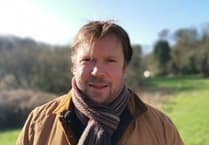
Peet Hahn, of Loddiswell, writes:
I was born in Germany in the mid-50s to a much-decorated British army officer and my Swedish mother.
We moved to a rural area on the coast of the East Riding of Yorkshire before I was four. Hull was my home city.
There were a few well off farmers but mostly incomes were very low and though there were more shops in our village than there are now, the choice was very limited, and, as for Hull, its reputation was not undeserved. ‘It’s grim up North’ was quite fitting!
.jpeg?width=209&height=140&crop=209:145,smart&quality=75)

Great Britain was often described at the time as the ‘Poor Man of Europe’. Many, including me, were still against joining the then EEC in ’73, seeing it as a protectionist rich man’s club which wouldn’t change anything for the better, especially the working man. Joining was also seen as a snub to the Commonwealth.
Investment outside of London and the Home Counties was poor but our oil revenues were supposed to change all that, and we did, indeed, have a manufacturing industry. The inflation rate in 1973 was 9.2 per cent, now 1.5 per cent, and unemployment rate was roughly the same as it is now at 5.1 per cent, so where is this gut feeling now of our jobs being taken from us coming from?
To experience a little of my Swedish heritage I spent four long summers in the mid to late-70s working there, mostly illegally as getting a work permit was well-nigh impossible before Sweden joined the EU. Even my Swedish mother had to apply for a work visa!
London became my home till 1997, with all it had to offer. It was an exciting melting pot of Londoners and migrants, including me, from the four corners of Britain and the world over. In all my years there it never felt un-British.
During this time my father’s mining town was decimated, not by the EU, but by British government policy. Hull was still struggling though some investment was starting to flow in from the EU.
Farming policy was starting to heed calls for a more responsible environmental approach and the EU was waking up to the wider issues of pollution and global warming.
In 1997, we moved lock, stock and barrel to the glorious South Hams, where my farming and environmental interests and our art practices could thrive. Over two thirds of our farm had been in the, admittedly, ridiculous Set Aside Scheme. Well meaning, but not helpful to the farmer nor the landscape, so we extracted ourselves and applied with an ambitious plan to the EU’s Countryside Stewardship Scheme.
With much local help we removed acres of ragwort, planted over 1,000m of hedgerows, rebuilt hedge banks, laid overgrown hedges, renewed fencing to protect boundaries, planted an orchard with over 30 varieties of local heritage apple trees and, best of all, opened up our farm to walkers between Loddiswell and the River Avon. The EU funding paid for around half this work.
We now host a wealth of visitors from all over Europe and the British Isles and are a feeding site for the endangered greater horseshoe bat, among many other species.
We are part of a large group of farmers and landowners from along the Avon Valley who have received essential EU funding to maintain the beauty and diversity of the landscape here and are working together with Devon Wildlife Trust and other groups to improve water quality and sensitive flora, fauna and hedgerow biodiversity. This is made possible by EU funding.
Thankfully there is now a cap on how much funding the larger farms can receive from the EU, so help is focused on the smaller, struggling farms of which there are many.
I am concerned that it will become necessary to hugely increase food production in our stunning landscape at the expense of the environment and all that it offers us if we take the decision to leave. Many farms may succumb to ‘economy of scale’ and be swallowed up by those with fat wallets.
To become reliant on the financial and service sectors in order to ‘swim free and alone’ really concerns me.
The financial sector has not covered itself in glory over the past decade. And the service sector is extremely vulnerable to economic downturns.
Much of central London was sold off and remains empty during Boris Johnson’s tenure as mayor. The owners are overseas investors from well outside the EU and with no deep interest in our well-being.
Looking to the future, there is a really positive resurgence of small manufacturing businesses with innovation at their heart, developed by mostly the young, across Britain. But, and we ought to take heed, the vast majority of the young see a strong Britain within Europe as their future. If our own MP Sarah Wollaston has the courage to change her mind and see beyond her natural fears, we all can – and back the promise of these British innovators.
Next year a very proud Hull is the European City of Culture. This is a huge achievement and almost entirely as a result of massive EU investment.
Comments
This article has no comments yet. Be the first to leave a comment.