
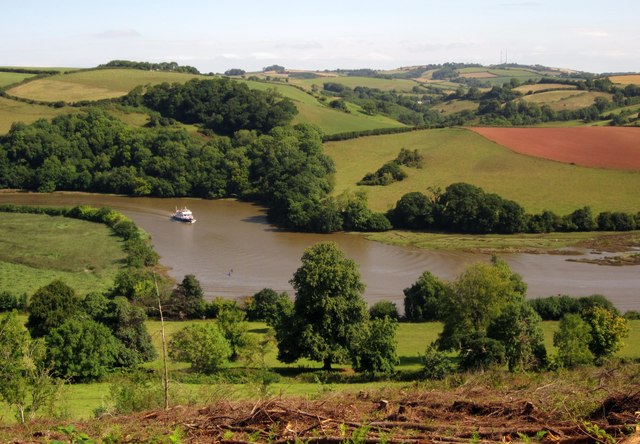
The Sharpham Trust’s work to restore a disappearing riverside habitat has received a substantial cash boost.
The South Devon charity’s Sharpham Estate borders the River Dart and the Trust has been repairing stone walls that protect areas of saltmarsh along its banks.
Now, thanks to a £25,000 grant from Devon Environment Foundation that work will continue.
Saltmarshes are essential as they cushion tidal and wave energy, help prevent flooding and erosion, capture carbon, provide habitats for fish, birds and other wildlife and help regulate water quality by absorbing excess phosphates, nitrates and salt in river water.


Saltmarshes store carbon at a rate estimated to be 40 times higher than woodland. Yet 85 per cent of England’s saltmarsh has been lost over recent centuries due to development and changing land use. Rising sea levels and climate change put even more at risk.
This project will protect 7,850 square metres of saltmarsh, an area which has recently been designated as a County Wildlife Site. That means that it is part of a Devon-wide network of connected green and blue habitats through which wildlife can move.
The grant funding will help complete the restoration of traditional dry-stone walls that protect a large area of saltmarsh in front of Sharpham House, three miles downriver from Totnes.
Sharpham Trust Director Julian Carnell said: “The Dart has limited areas of saltmarsh remaining and so it is important to retain and conserve what still exists and prevent further deterioration.”
Amanda Keetley, Executive Director of Devon Environment Foundation, commented, “DEF is delighted to enable this area of saltmarsh at Sharpham to be protected. This is an essential first step to restore saltmarsh more widely on the River Dart.”
The funding will enable a local Stonewaller Martin Stallard to continue to rebuild collapsed sections of wall, which he began to do in 2024.
Comments
This article has no comments yet. Be the first to leave a comment.