
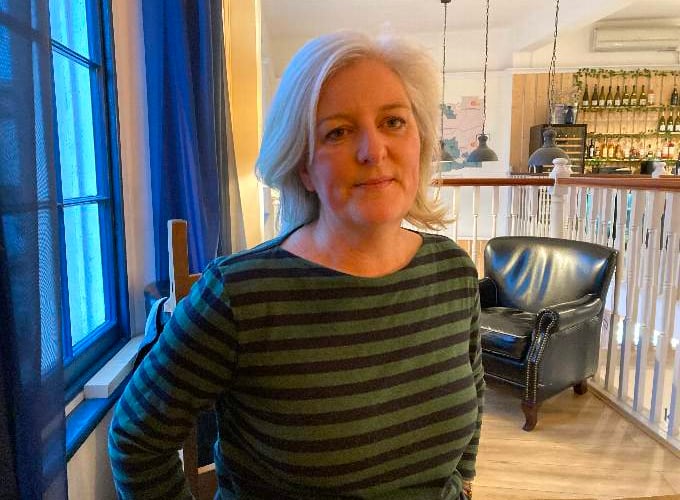
Caroline Voaden is the former leader of the Liberal Democrat delegation to the European Parliament. A freelance journalist, she is now the CEO of Devon Rape Crisis and Sexual Abuse Services and formerly ran a business on Totnes High Street.
Caroline was elected as an MEP in May 2019 and seven months later on January 31 2020 the UK left the European Union and she was out of a job. What motivated her to stand?:
“On the night of the referendum (June 23 2016) I was watching the television and didn’t really believe the country would vote to leave. I live in Totnes which was a bubble of remain voters. In the run up to the referendum I had been running my own business and really consumed with that. I had’t really lifted my head and looked at what was going on outside the bubble seeing the vast pools of people who thought otherwise. Hearing David Dimbleby say ‘we’re out’ was really a punch to the stomach. I felt quite devastated as I’d spent a large part of my life in Europe, I’d studied languages at university. I feel very European and I’d had relatives in Europe. I’ve got friends all over Europe and I felt I had very strong ties. I picked up the phone the next morning and joined the Lib Dems who were unequivocally European. Started working with Devon for Europe and as time wore on it felt like there might be a possibility of a second referendum, a people’s vote. It became more more and more obvious that the referendum had been won on lies and half-truths and misinformation. I had worked in the Balkans and one thing that had whipped up the war in the former Yugoslavia were the papers and their really biased coverage. Likewise a lot of the Brexit coverage was whipped up by right-wing oligarchs who don’t live in this country and don’t pay tax in this country. By the time that we unexpectedly were to take part in the European elections I had been a Lib Dem candidate twice, I had lived in Europe, had all this European experience, spoke languages and just felt that it was the right place for me to be. I threw my hat in the ring and a couple of weeks later I was the lead candidate. Four weeks after that somebody said you know you’re going to get in don’t you? You better start looking at how you’re going to commute from Totnes to Strasbourg (flight from Exeter to Paris then a special train to Strasbourg). That was it! It was a complete whirlwind, very sudden and unexpected and absolutely brilliant. The best thing I’d done in my life.”
I asked what Caroline had learnt from more experienced MEP’s: “They were extremely supportive. We were in a group called Renew Europe which used to be called ALDE- that’s liberal parties from all across Europe. There were around 110 of us. There were lots of new French MEPs and 16 Liberal Democrats and we learned from each other. You work in the group and you work on your committees. There were much more experienced people who had been around for one or two terms and the staff were very experienced as well. We all employed assistants who had worked for other MEPs so they knew the ropes, they knew the building. They told us where to be, gave us the papers for the meeting and did all the prep. I was n the Environment Committee so we were scrutinising legislation from the previous term as well as new legislation. At the beginning of the mandate there are a lot of elections for the leaders of groups and committees. Negotiating the European Green Deal was the big thing we were involved with and we got that passed in Parliament just before we left. Even within the liberal group some people are more liberal than others. The German FDP were much more right-wing than the Danish or Swedish parties. We had one big discussion about declaring a climate emergency but the Germans really had a problem about using the word emergency. They didn’t deny there was a crisis but they didn’t like the word but in the end we got is passed. It was just fascinating, a real lesson with consensus-building, of coalition politics and how that works. Nothing can get through Parliament unless you have 50% of the vote. You can’t get something through as a group without having other groups on board so you’re always negotiating with the Greens or the Labour group or the centre-right EPP. you need to find other like-minded people and that is so different from what happens at Westminster.”
.jpeg?width=209&height=140&crop=209:145,smart&quality=75)
“I’m massively in favour of PR (proportional representation). People say it would mean fringe parties and lunatics getting in. It doesn’t matter. Everyone would get a voice. At the European Parliament the extremes of left and right are there and they make their speeches but it doesn’t matter they get drowned out by the moderate voices in the middle. If you look at the numbers it will always be a fairly centres majority in this country. I think PR would encourage people to vote who don’t vote and would encourage people to vote more honestly. I think you would see more honest representation of what the country really wants.
I wanted to know how Caroline felt when Brexit itself was approaching: “It was a really difficult month, we had just lost the (general) election and we were leaving. We went back to Brussels and Strasbourg. It was really hard. Together with our staff there were around 70 of us just in the Lib Dem delegation all facing an uncertain time. Little did we know there was going to be a global pandemic after Brexit. We knew that when we walked out for the last time, that was it for the UK. None of us wanted that to happen and we had hoped for so long that we could turn it around, that something would happen back home that would enable a people’s vote. We felt that we would have won it, that the tide had turned. We had television cameras on the corridor all of the last week. We were making and unpacking boxes for TV stations from all over Europe and doing interviews ‘what does it feel like to be a British MEP?’ Being in the chamber on that last day were made our speeches and sang ‘Old lang syne’ which we had planned to do and practiced. I don’t think the Brexit party knew we were going to do it. We felt it would be the strongest image for the news pictures and it was absolutely amazing. Everybody was crying including our European colleagues and it was really emotional. It felt so wrong. It felt like such a stupid thing to do. Personally every day since I think has been proof it was a really really bad decision. Every time somebody asks Anthony Mangnall (Totnes MP) what the benefits or Brexit are, he still can’t give an answer. There isn’t anything that he can point to that is better because of Brexit. Not one thing.”
Did Caroline think we may re-join the EU one day?: Well who knows what is going to happen in the future? I like to think the question will be revisited yes. I don’t know when. I don’t know how long it will take. I think there are a lot of steps to take before we talk about rejoining. We caused a lot of trouble in Europe and we made life difficult for a lot of people.
I asked if she thought the EU would have us back?: “Honestly I think they would. I think there would be conditions and caveats. I think we have to prove ourselves first. It’s like a broken relationship isn’t it? You want to get back together. You have to go through a process of reconciliation. We didn’t have to leave the single market, we didn’t have to leave the customs union.The re was a choice made by the British government and Brexit could have been done very differently. The Brexit they chose to do was a really, really damaging Brexit. Maybe the first steps would be to look at the trading arrangement. Maybe try to stick to some of the agreements that we’ve made rather than tearing up and changing them. Those were the agreements that we signed. They were negotiated. We’ve got an awful lot of work to do to rebuild trust and I don’t see the current government doing that. They’re just making things worse. Look at the migrant situation with France- I don’t see any grown up attempt to be mature adults. I long for a change of government to start rebuilding those bridges.
I wanted to explore the migrant issue. Wasn’t it a major driver of Brexit?: “I think the migrant issue was fundamental in the leave campaign but I think it was misunderstood by people be cause the people coming here from the European Union under the freedom of movement rules were not the migrants that people get upset about and as you can see the hospitality industry is on its knees as is our food production industry. That was a big own goal. The problem is there are no safe, legal routes for people to come into this country. A lot of these people are genuine refugees. They are risking their lives crossing the Channel in inflatable dinghies, trying to make a better life for themselves. I think it’s absolutely shocking, it’s appalling. They should be given safe, legal routes to come over and have their asylum claims assessed. Most of the people who get here claim asylum successfully and they go on to make successful lives. They want a good life, they want to work, they want to be part of the community and settle. Again it comes down to media propaganda. There are always a few bad apples, they’re who you read about and people get a really twisted view.
I interviewed Nigel Farage in Brixham recently so what did Caroline think of him?:
“On a human level I find it really appalling the kind of stuff you hear from Nigel Farage, the opposition to the RNLI saving people at sea who are dying. I think he’s a really nasty piece of work. In a way he’s a very clever politician isn’t he because people listen to him. He manages to whip up the right and we don’t have enough voices on the left who are destroying the myths that he creates and I think that’s very dangerous.”
“He talks in language that people can relate to and that’s certainly something that we on the left are really bad at. Simple messages, three word slogans. Te remain campaign was woeful, really woeful but I think part of that was this assumption that they were going to win. They didn’t really take it seriously. Everybody who fought for remain realises that the campaign didn’t hit home. Remain isn’t a good word, it isn’t even an active verb. It was too intellectual and we didn’t do enough to pull on the heartstrings. It’s all about emotions and people are fearful about not being able to see a doctor or finding a place at school for their child, the housing crisis. The truth is a lot of those things have nothing to do with immigration and nothing to do with membership of the European Union. It’s more to do with disinvestment due to 10 years under a Conservative government. The millions and millions of pounds that have been disinvested from local councils so they can’t provide services. Underinvestment and no long-term planning for the NHS. It’s on it’s knees because they can’t find the people to do the jobs. Before the Conservatives introduced Right to Buy (under Margaret Thatcher) there were seven million council houses in this country now there are two million left leaving us five million short. Second homes and Air BnB’s are part of it but the real damage was done by letting people buy their council houses cheap and then not replacing them. We have 16 Conservative MP’s in the South West and people are on their knees because they can’t get homes. They have been in power for 11 years and done nothing about it.
I put it to Caroline that back in the day there were many Liberal and Lib Dem MPs in the South West- could that happen again?: “I really hope so. The Conservatives have a majority of just one in the South Hams (SHDC).”
Caroline correctly predicted the outcome of last Thursday’s Shropshire-North by-election caused by the resignation of Owen Patterson over sleaze. She told me at the time: “I’m very excited about what’s going to happen. There could be a massive upset. Two Tory councillors have joined right-wing parties because they’re not right-wing enough. The Guardian has told Labour voters to vote Lib Dem to get the Tories out which is a massive shift for them to do that. People have had enough of this government. They don’t think Boris Johnson is a capable Prime Minister. On the doorstep the NHS is coming up a lot, ambulance waiting times-it’s terrible, in a rural area like us people are waiting hours and hours for an ambulance. Pepper Pig keeps coming up on the doorstep. We’re living through really difficult times and we have a Prime Minister who talks about Peppa Pig in a major speech to British industry. It’s embarrassing and I think people have had enough. I think North Shropshire is a bit of a bellwether for what might happen. It’s Tory. It’s a rural area. This was a very liberal part of the country and there are definitely grounds for optimism.”
Caroline has been Chief Executive of Devon Rape Crisis and Sexual Abuse Services for just over a year. What has that been like?: “We’re the biggest provider of specialist support services to victims of sexual violence and childhood sexual abuse in Devon. We run a free telephone helpline three days week and we do face-to-face support sessions. We offer up to 24 weeks of free therapy. It’s been a really tough year. Little did I think that violence against women and girls would become one of the main topics of conversation. The murder of Sarah Everard this year was a bit of a turning point I think. It woke a lot of people up to something thats been going on for decades and is not treated with the seriousness it needs to be. I think it’s often been just seen as something of a women’s issue. A feminist thing. It’s really not. I see it as a societal problem and we all need to be aware what’s going on. 97% of women report that they have experienced some form of sexual violence or sexual harassment. The incidents at university are horrific. Our schools are seeing sexual harassment and even sexual violence as a norm. It’s hard to know if it’s getting worse or more reported but the elephant in the room is pornography. When I was a teenager pornography was the realm of top-shelf magazines, it’ wasn’t hard-core, it wasn’t easily accessible. What we’re seeing now is pornography on a mobile phone. Every child of 11 and up has a mobile phone. They all have access to nasty, hard-core, violent, vicious awful stuff. For a lot of boys and young men that is the first learning experience they have of what a physical sexual relationship is like. We have to have serious look at how the porn industry is operating and the damage it is doing to young people. If you talk to young women about choking it is quite normal, they all know what it is, they all accept that people do it, that it might happen to them or expected of them. I find it horrific that that kind of violence is considered normal. It’s dangerous and can go so badly wrong. I don’t know what the answer is because even if you ban pornography in our own country it is coming in on the internet from elsewhere. For me this kind of issue is another reason we have to be part of the European Union because we can’t do this on our own. These issues are complicated and global. We need to be talking to other people to find solutions. A lot of it is down to money. These corporations are very wealthy and well-connected but we need to say this has got to change. I think things are getting worse. There is a culture of mysogyny that is dangerous for young women. There isn’t enough about how we change the language and the culture and the expectation. The roles for girls and boys are still very polarised. As an organisation we are funded for our work with survivors but we need the funding to go and do prevention work and education which is crucial.
Finally I wanted to know what her experience was of running a business in Totnes: “It’s very hard work. You need very deep pockets. You need to spend years building up a client base and funding it yourself before you start turning a profit. Operating on a High Street in a small town is really difficult. We didn’t have the footfall we needed. We ended up being in competition with internet giants who didn’t really exist when I set up the business. Suddenly the world changed and we just couldn’t compete which I think is the case for a lot of small retail businesses. I loved it. I loved every minute of it but it was really, really hard and after five years of not being able to pay myself a wage and working seven days a week I decided to move onto something else. I really admire all the independent shops in Totnes, Kingsbridge and elsewhere in the South Hams that manage to keep going because its hard. That so many of them have managed to survive the pandemic is a real tribute to their ingenuity, commitment and some emergency loans from the government to tide them over but we really need to support these independent business because if they go these towns will be different.
Comments
This article has no comments yet. Be the first to leave a comment.