

Fewer EU citizens are registering for national insurance numbers in South Hams than before the Brexit vote, the latest figures reveal.
The statistics, from the Department for Work and Pensions, show how many foreign nationals have successfully applied for NI numbers, which are required to work or claim benefits.
In the 12 months up to March this year 197 people from the EU registered for NI numbers.
In the year before June 2016, the month of the referendum, 237 people registered, 40 more than in the latest period.




The data divides the European workers into three groups.
It identifies people from the EU15, which are countries that joined the bloc before 2004, like France, Spain and Germany.
The EU8 countries joined in the 2004 enlargement, and include nations such as Poland and the Czech Republic.
The EU2, Romania and Bulgaria, joined in 2007, but could not move to the UK to work until 2014.
The biggest drop in new workers registering post Brexit was by those from Romania and Bulgaria. In the 12 months up to March, 35 Romanian or Bulgarian nationals signed up for NI numbers, 27 fewer than before the Brexit vote. Of residents from the EU15, ten fewer registered. And the number of people applying for NI numbers from EU8 countries, reduced by three or 44 per cent.
The data does not explain why the numbers have reduced.
It could be due to post-Brexit uncertainty or other factors such as the improvement of the economies in residents’ home countries. Poland, for example, currently has a record low unemployment rate.
But the number of applicants from outside the EU has slightly increased.
A total of 42 people from the rest of the world registered for NI numbers in the 12 months up to March, a rise of one on the period before Brexit. From outside of Europe, the region with the highest number of applications was Oceania, which includes Australia and New Zealand, with 11 registrations.
Despite this the overall number of foreign nationals registering for NI numbers in South Hams has reduced, due to the drop in EU citizens applying. In the 12 months up to March a total of 242 people gained an NI number, a decrease of 35 on the year before the Brexit vote.
The NFU has warned: "There has been concern that there will be a workforce gap after Brexit, particularly in catering, construction and agriculture."
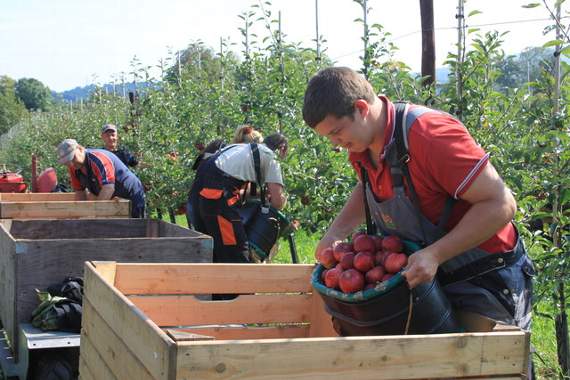
There could be a significant shortage of people to work on Britain’s farms and throughout the food and farming sector if government does not address growing concerns over agriculture’s access to workers, a new NFU report says.
Looking ahead to Brexit, the report from the NFU’s Vision for the Future of Farming says that the supply of seasonal workers for the next two seasons is now in jeopardy. The number of seasonal workers coming to work on British farms in the horticultural sector last year had already dropped 17 per cent.
Justice Secretary David Gauke said prisoners could fill the roles that migrant workers had left behind.
The DWP said the figures should not be used to indicate immigration levels, as foreign nationals could have been in the country for some time before applying for an NI number.
According to the ONS’ latest nationwide immigration statistics Romanians moved above Irish and Indians to become the second most common non-British nationality in the UK, after Poles.
Comments
This article has no comments yet. Be the first to leave a comment.