

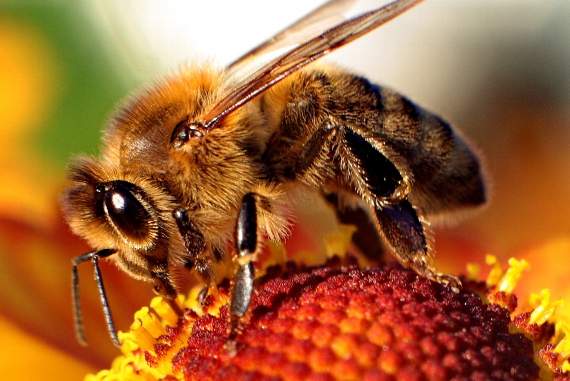
A SOUTH Brent bee-keeping expert has joined others to urge Devon County Council to ban bee-harming pesticides on council land.
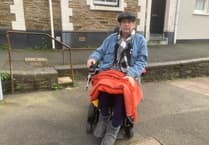
Dick Everett of the South Hams group of Devon Bee Keepers Association, supports a recent petition on the Friends of the Earth website, but says the decline in the number of our bees is a ‘much bigger problem’.
Devon groups such as the Devon WI, the Devon Wildlife Trust, Buglife South West as well as Friends of the Earth, are all supporting the petition. Devon County Council considered measures to protect out pollinating insects when its Place Scrutiny Meeting met on Monday, March 7.
Dick Everett said: ‘My response is to fully support the petition, provided that the banning of neonicotinoids is not seen as the once and for all answer to the problem of worldwide bee losses.


‘This is because these systemic poisons are only part, agreed a significant part, of a much bigger problem. The usual knee-jerk reaction in dealing with many an issue is to single out and pinpoint the blame for it, so it can be understood by lay members of the public – who can then see that something is "being done about it".
‘But bee losses are part of a much wider problem than just the thoughtless use and application of manufactured deadly poisons. The problem is also caused by the natural diseases and pests of honeybees - and many other pollinating insects - by the many and varied effects of global warming and by the responses of a fragile planet.
‘The ways that bee colonies are managed by beekeepers and the serious loss of foraging habitat by the encroachment of man into the countryside, with his roads, factories and houses, are also significant factors.’
In the Place Scrutiny Meeting on Monday, Sarah Jennings, county ecologist, called the decline in bee numbers a ‘big issue’ with problems including pesticides, habitat loss, disease and climate change.
She called for the council to implement a Devon County Council Pollinator Action Plan and work towards ‘eliminating’ the use of neonicotinoids, encourage tenants to manage land as countryside stewards, encourage communities to manage verges and hedgerows for wildlife and eliminate neonicotinoids use on the rest of the estate.
She said ‘there are five neonicotinoids in use in the country’, three have been banned, but only for specific uses, and two others are still in use.
She suggested ‘banning pesticides for cosmetic reasons’ and encourage pollinator planting and to add a ‘condition’ for every new planning development to ‘do something for pollinators’.
She also said that July would see the first Devon Pollinators Month in July, which will include asking schools, businesses and other organisations to sign up for a Pollinator Pledge. She said these measures could be ‘pulled together easily and will no increase in funding’.
Councillor Robert Vint, Totnes Rural, said there was ‘substantial scientific research’ on the matter, which they must ‘take on board’ and that the ‘evidence in support for the ban is so clear’.
Cllr Julian Brazil, Kingsbridge and Stokenham, said he was ‘disappointed’ with the report as it needed to be ‘more militant’ and ‘wherever possible we should be looking to ban’ the use of neonicotinoids.
He said there was too much talk of ‘encouraging’ and ‘hoping’ and that you needed to be stronger with developers who are ‘only interested in the bottom line’ and ‘won’t do anything if they don’t have to’.
He said DCC needed to ‘send a message from here’ than the council ‘understands the ecosystem and biodiversity’.
Cllr Gordon Hook, Newton Abbot South, said he wante ‘Made In Devon’ to mean something, and the county should ‘lead the rest of the country and lead Europe’ in the matter.
He said the ‘scientific evidence is overwhelming’ and without pollinators, ‘we would be here, our food supply wouldn’t be here’.
He said he ‘believed passionately’ in the issue and that the council could bring in an ‘immediate ban on neonicotinoids’, write a ‘new contract for new tenants’ and ‘enter into negotiations with current tenants to change their contracts’. He said ‘East Sussex have done it, are we less that East Sussex?’
Cllr Ray Radford, Willand and Uffculme, agreed and pointed out evidence that if the bees and pollinators go, the food supply would go ‘within four years’, but cautioned that their tenant farmers could be ‘disadvantaged’ compared with other farmers.
Cllr Kevin Ball, Okehampton Rural, warned against ‘jumping too quickly’ and urged a ‘slower approach’.
Cllr Vint replied that the council could either ‘drag our feet or make a point and lead’.
Cllr Andrew Moulding, Axminster, who chaired the meeting, called for the recommendation to ban the neonicotinoids on council land and adoption of the Pollinators Action Plan, be taken to Cabinet ‘at the earlier possible chance’, the April Cabinet Meeting, and for the legal situations regarding contracts to be checked in the meantime.
He noted that the vote on this recommendation was ‘pretty well unanimous’. The cabinet meeting will be held on Wednesday, April 13.
Over a thousand people have already signed the petition entitled ‘Ask Devon County Council to make the right choice for bees’ which can be found on the Friends of the Earth website: www.foe.co.uk/act/ask-devon-county-council-make-right-choice-bees.
Comments
This article has no comments yet. Be the first to leave a comment.