

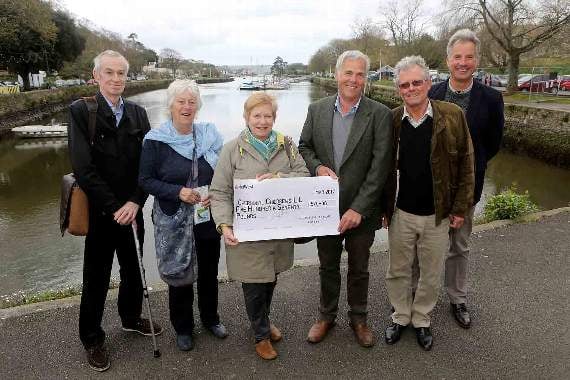
Kingsbridge Estuary Rotary Club recently presented a cheque for £570 to the Chernobyl Children’s Lifeline charity.
Sue Wyeth, chairman of the Totnes and South Hams Link - Chernobyl Children’s Lifeline said: “We would like to thank the Kingsbridge Estuary Rotary Club for their generous donation. This money will pay the costs of bringing a child to the South Hams this year.
“It’s a holiday for the kids, but there are more far-reaching serious effects.
“The children will receive dental treatment and their eyes tested. And of course the fun is therapeutic, they relax and gain in confidence. Each year we find the change in the children at the end of the month is wonderful.”



Sue continued: “Many of the children appear healthy, but this is deceptive. “The radiation will affect where they live for hundreds of years, so they are subjected daily to the long-term effects of incessant radiation.
“They drink contaminated water and wash in it and eat contaminated food. Living conditions are poor as is their nutrition. Many village houses don’t have mains water, using wells for their supply which often freeze in their long harsh winters.
“Their plight is worsened by a difficult economic situation, a shortage of medical facilities and medicine. The children rarely have access to doctors, dentists or opticians. Unemployment is rife and they face challenging family circumstances and social hardship. The respite we offer the children means that when they come to the UK they can eat fresh food, breathe clean air and go home in much better health with their immune systems recharged.”
Chernobyl Children’s Lifeline will be hosting children in the South Hams again this summer. The children visiting live in the contaminated area close to Chernobyl in Belarus, within walking distance of the exclusion zone.
The average age of the children is nine-years-old.
Sue recently travelled to Chernobyl describing it as an “awesome, emotional experience”.
She said: “The great big ugly old reactor stood there, rusting. It’s surrounded by a concrete sarcophagus but it hasn’t changed a thing - a huge amount of radioactivity remains at the bottom of the reactor.”
Wednesday, April 26 marked the 31st anniversary of the catastrophic Chernobyl nuclear disaster, when reactor 4 exploded at Pripyat in Ukraine, near the border with Belarus.
In December, the United Nations voted to mark the day as International Day of Remembrance of the Chernobyl Disaster.
Dennis Vystavkin, chief executive of Chernobyl Children’s Lifeline said: “It is important that we use the day to remind people of the bravery of the liquidators who put out the fires and prevented the accident from becoming an even worse catastrophe.
“And of the people who had to leave their homes forever and abandon the villages where their families had lived for generations.
“And of the 100-fold rise in thyroid cancers and increases in many other diseases in both children and adults; of all those who have died and those who still suffer today.”
For further information on the Totnes and South Hams Link, visit www.ccll.org.uk/totnes.
Comments
This article has no comments yet. Be the first to leave a comment.