
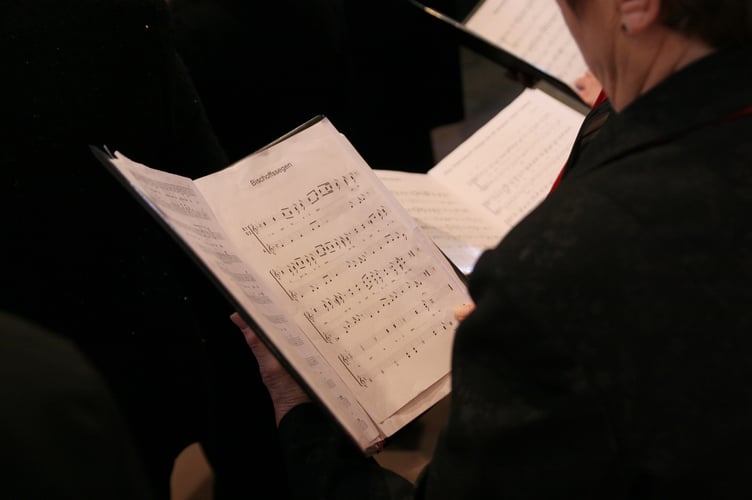
Christmas carols are heard everywhere at this time of year, as carol concerts and festive sing-alongs are hosted in various venues nationwide. This year, there have been Christmas carolling events across the South Hams, in towns such as Kingsbridge, Salcombe and Malborough as people have gathered to watch Christmas lights switch ons and experience some festive cheer.
But the extensive and rich history of the Christmas carol is largely undiscussed.
The early origins of Christmas music are often believed to stem from pagan songs: music that would be sung aloud and accompanied with dancing, with a repeating verse-refrain structure. Yet, this music was not associated with the Christian festival of Christmas, and would be sung during the Winter Solstice, as well across other seasons. These songs arose mainly from oral tradition, meaning the versions varied wildly, and the music was far less standardised than the carols heard today.
The first Christmas carol is considered by many to be ‘The Angels Hymn’, thought to be composed in 129AD. This belief is associated with a quote by Telesphorus, Bishop of Rome from 336 AD which says: “in the Holy Night of the Nativity of our Lord and Saviour, all shall solemnly sing the Angels' Hymn”, and the centuries following saw many similarly religious hymns, such as ‘Jesus Refulsit Omnium’.
.jpeg?width=209&height=140&crop=209:145,smart&quality=75)

With the arrival of the 14th century came an amalgamation of languages appearing in songs, as Latin phrases and their vernacular translations began to appear in the same poem or song. An example is the popular hymn ‘Dulci Jubilo’, which is a combination Medieval German and Latin, and is thought to have been written by the Heinrich in 1328.
However, it wasn’t until 1426 that explicit connection to the Christmas period was mentioned in English, by Shropshire poet and clergyman John Audlay, who’s works included 25 ‘Caroles of Cristemas’. The rest of the fifteenth century saw an abundance of carols, including the famous ‘Holly and the Ivy’.
In 1644, Christmas was famously banned by the Puritans, but the Reformation saw popular chorales and secular music return during worship. At a similar time, songs surrounding the idea of the Nativity began to appear in France, as the first noels were created, which then began to spread across Europe.
The 19th century saw an abundance of carols, as Christmas became established as a public holiday, with heavy emphasis on children’s carols like ‘Once in Royal David’s City’, ‘Away in a Manger’ and, in America, ‘Jingle Bells’.
With the turn of the 20th century, music became more secularised and commercialised, which saw Christmas favourites like ‘Santa Clause is Coming to Town’ and ‘White Christmas’ appearing, and, later, songs such as ‘Last Christmas’ and ‘All I want for Christmas is You’.
Now, Christmas songs come in an abundance, with a variety of new creations and interesting versions of old classics popping up every year. Take, for instance, Patrick the pony’s new single ‘Neigh Hurray’, or LadBaby’s ‘Sausage Rolls for Everyone’, which debuted on 24 December 2021 and became the 70th Christmas number-one.
There are still opportunities to join in Christmas carols and enjoy the festive spirit before the big day. Upcoming events include the Salcombe Rotary Clubs' Carols around the Christmas Tree on December 19th at 6pm in Whitestrand car park.
Comments
This article has no comments yet. Be the first to leave a comment.